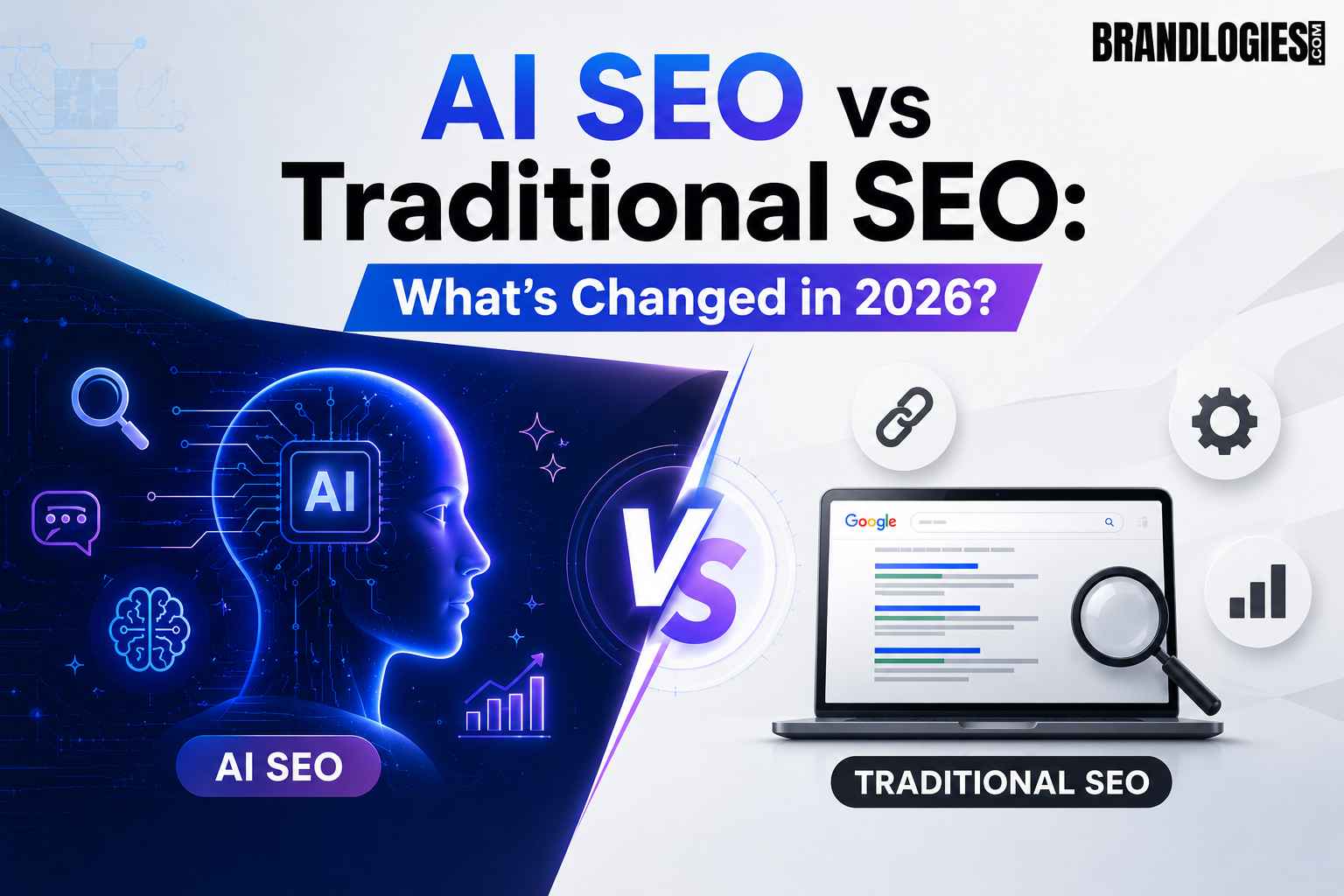
Traditional SEO ranks pages using keywords, backlinks, and technical optimisation. AI SEO (also called AEO or GEO) focuses on getting content cited inside AI-generated answers from tools like ChatGPT, Gemini, and Google AI Overviews. In 2026, search results aren’t just ranked links — AI tools often answer questions directly before a user clicks any website. You need both approaches: traditional SEO builds the foundation, AI SEO gets you cited on top of it.
What Traditional SEO Still Gets Right
Traditional SEO hasn’t disappeared. It’s still the base layer everything else builds on.
- Keyword research — matching content to what people actually search for
- Technical SEO — crawlability, site speed, mobile usability, clean site structure
- On-page optimization — headings, meta tags, internal linking
- Backlink building — earning links from trustworthy, relevant sites
Google has increasingly focused on rewarding sites that combine these fundamentals with genuine expertise, rather than volume alone. Without this groundwork, AI systems have nothing solid to crawl, evaluate, or cite in the first place.
What’s Actually Changed With AI SEO in 2026
From Rankings to Citations
The biggest shift is the success metric itself. A page ranking #3 on Google used to mean strong performance. Now, that same page might get skipped entirely if an AI Overview answers the question directly above it. What matters increasingly is whether your brand gets mentioned inside that answer.
Entities Matter as Much as Keywords
AI systems don’t just match phrases — they recognize entities: businesses, people, products, and how they relate to each other. A site can rank well for a keyword but still stay invisible in AI answers if it lacks clear entity signals like structured schema, consistent branding, and third-party mentions.
Brand Mentions Without Links Still Count
Traditional SEO treats backlinks as the strongest trust signal. AI SEO recognizes something broader — being mentioned by name in reviews, forums, podcasts, and industry publications, even without a link back to your site, can still shape how AI models perceive your credibility.
Answerability Over Keyword Density
Many SEO professionals recommend structuring content so each section directly answers a specific question, rather than optimizing purely for keyword frequency. Clear definitions, direct answers, and well-organized sections make it easier for AI systems to extract and quote your content accurately.
AI SEO vs Traditional SEO: Side-by-Side
| Feature | Traditional SEO | AI SEO (AEO/GEO) |
| Main goal | Rank on page 1 | Get cited in AI answers |
| Core signal | Backlinks, keywords | Entity signals, structure, mentions |
| Content format | Keyword-optimized pages | Question-answer, extractable passages |
| Success metric | Position, clicks | Citation frequency, AI referral traffic |
| Platform focus | Google, ChatGPT, Gemini, Perplexity, Bing Copilot |
Expert Tip
Structure at least one section per page as a direct, standalone answer to a common question your audience asks — short, factual, and quotable on its own, without needing the rest of the page for context.
Common Mistakes Businesses Make
- Treating AI SEO as a separate project instead of an extension of existing SEO work
- Ignoring technical SEO while chasing AI visibility, even though AI systems still need clean, crawlable pages
- Publishing AI-generated content with no human oversight, which often lacks the real-world experience AI models are now trained to favor
- Tracking only rankings and clicks, missing zero-click visibility inside AI answers entirely
Many businesses work with experienced digital marketing agencies like Brandlogies to build both layers together, rather than treating them as competing priorities.
Choosing the Right Approach for Your Website
AI SEO and traditional SEO aren’t rival strategies — they’re two layers of the same discipline. Traditional SEO builds the technical and topical foundation search engines and AI systems both rely on. AI SEO builds on top of that, focusing on structure, entity signals, and answerability so your brand gets cited, not just crawled. Websites that keep investing in both are the ones that stay visible as search keeps evolving — across Google, AI Overviews, and every AI-powered platform in between.
Frequently Asked Questions
1. Is AI SEO replacing traditional SEO? No. AI SEO builds on traditional SEO fundamentals rather than replacing them.
2. What is the main difference between AI SEO and traditional SEO? Traditional SEO targets rankings; AI SEO targets citations inside AI-generated answers.
3. Do backlinks still matter in 2026? Yes, backlinks remain a strong trust signal, though brand mentions now matter more than before.
4. What is AEO in SEO? AEO, or Answer Engine Optimization, focuses on structuring content so AI tools can extract clear, direct answers.
5. Should small businesses worry about AI search visibility? Yes, since AI-powered answers increasingly resolve buyer intent before a traditional search happens.
6. Does schema markup help with AI SEO? Yes, structured data helps AI systems understand entities and context more accurately.
7. Can AI-generated content rank well? Yes, if it’s accurate, well-researched, and reviewed by a human with real expertise.
8. How do I know if AI SEO is working? Track AI citation frequency and referral traffic alongside traditional rankings and clicks.