Introduction
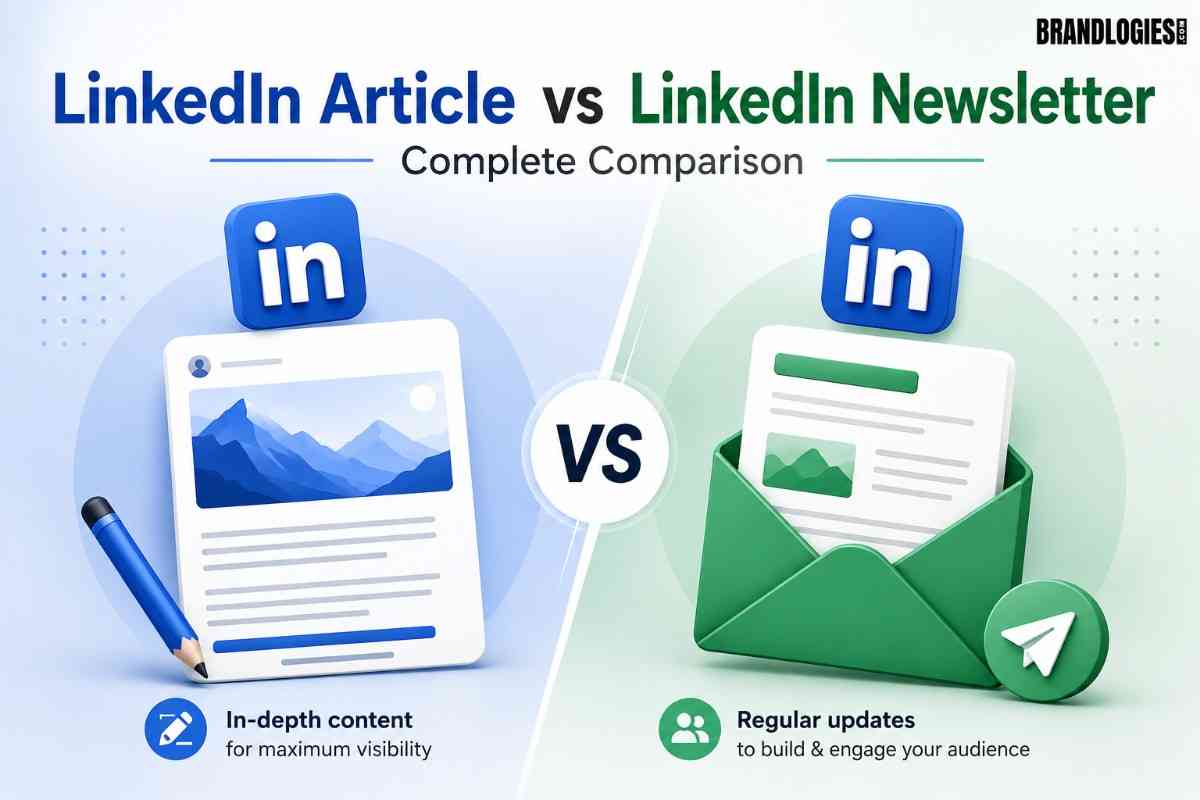
A LinkedIn article vs LinkedIn newsletter comes down to reach versus retention. A LinkedIn article is a long-form piece published on your profile, discoverable through search and shared organically across the platform, making it a lasting portfolio of your expertise. A LinkedIn newsletter is technically the same rich-text format, but with subscriber distribution layered on top — each issue lands directly in subscribers’ inboxes and notifications, bypassing LinkedIn’s organic feed entirely. In practice, articles are better for attracting new, cold leads through search and evergreen visibility, while newsletters excel at nurturing an existing audience with consistent, direct delivery. Most professionals seeing strong results on LinkedIn in 2026 aren’t choosing one over the other — they’re using both, each for the job it does best.
What Is a LinkedIn Article?
A LinkedIn article is a long-form post published directly on your profile, using LinkedIn’s built-in rich-text editor. It supports images, video, and formatting well beyond the character limit of a standard post, and it’s indexed by both LinkedIn’s internal search and Google. That indexing is what gives articles their real long-term value: a well-written article on a timeless topic can keep attracting search traffic and profile visits years after it was published, effectively working as a standing portfolio of your expertise.
What Is a LinkedIn Newsletter?
A LinkedIn newsletter is a recurring publication built on the same underlying article format, but with one key difference — people subscribe to it, and every new issue gets pushed directly to those subscribers through email, push notifications, and in-app alerts. That distribution model matters because it sidesteps LinkedIn’s organic reach entirely, which has declined significantly over the past couple of years. Newsletters tend to see meaningfully higher open rates than a typical organic post reaches, simply because they land directly in front of an audience that already opted in.
Expert Tip
Don’t treat these as competing formats. Publish a strong evergreen article, then add a short call-to-action at the end inviting readers to subscribe to your newsletter — this turns a single piece of search-driven content into a steady source of new, engaged subscribers.
LinkedIn Article vs Newsletter: Side-by-Side
| Feature | LinkedIn Article | LinkedIn Newsletter |
|---|---|---|
| Distribution | Organic feed, search, profile visits | Direct to subscriber inbox and notifications |
| Best for | Attracting new, cold leads | Nurturing an existing, engaged audience |
| Discoverability | Indexed by LinkedIn and Google | Discoverable, but built around a subscriber base |
| Publishing cadence | One-off or occasional | Regular, recurring schedule |
| Longevity | Strong evergreen value | More timely, trend and news-driven |
| Underlying format | Rich-text, long-form | Same rich-text editor, with subscriber layer added |
Which One Builds Authority Faster?
This depends on what “authority” means to you. If it means being discovered by people who’ve never heard of you, articles win — a solid evergreen piece can keep pulling in cold traffic from search long after it’s published, and articles are shared the way a resource gets shared: “check this out.” If authority means commanding the attention of a loyal, recurring audience, the newsletter tends to be the stronger vehicle. Newsletters get shared as a personal endorsement — “you should subscribe to this” — which carries more weight than sharing a single piece of content.
Which One Drives More Leads?
Newsletters are generally better at nurturing leads through a structured sequence — building awareness, building consideration with case studies or proof points, then closing with a clear call-to-action. That structured approach is a big part of why sequenced newsletters tend to convert noticeably better than one-off content. Articles, meanwhile, do the heavy lifting earlier in the funnel: someone finding your article through Google or LinkedIn search is already interested in the topic, which makes them a higher-quality prospect the moment they land on the page.
How to Choose the Right Format
- Choose an article when you want to build long-term, searchable authority on an evergreen topic that will stay relevant for years
- Choose a newsletter when you want consistent, direct contact with an audience you’re actively trying to nurture toward a specific outcome
- Use both by publishing standalone articles for search visibility, then promoting your newsletter inside them to convert that traffic into a recurring, owned audience
Common Mistakes to Avoid
- Publishing only newsletters, missing out on the evergreen search traffic that standalone articles can generate for years
- Publishing only articles, without ever building a direct, recurring channel to nurture the audience you attract
- Ignoring older articles, when updating them periodically to stay current can keep them ranking and driving traffic
- Starting a newsletter without a promotion plan, since subscriber growth requires active effort, not just publishing and waiting
Many businesses work with experienced digital marketing agencies like Brandlogies to build a combined LinkedIn content strategy that uses articles for discovery and newsletters for retention.
Building a Format Strategy That Works Both Ways
The real answer to LinkedIn article vs newsletter isn’t a single winner — it’s using each one for what it does best. Publish articles around evergreen, search-friendly topics to keep attracting new people to your profile, and use a newsletter to turn that attention into a direct, recurring relationship with your audience. Promote your newsletter inside your articles, keep older articles refreshed so they keep ranking, and give your newsletter a clear, sequenced structure so it actually converts. Done together, the two formats compound each other instead of competing for the same attention.
Frequently Asked Questions
1. Is a LinkedIn newsletter the same as a LinkedIn article?
Technically, each newsletter issue is a LinkedIn article, but with subscriber distribution and notifications layered on top.
2. Which is better for SEO, a LinkedIn article or newsletter?
Articles tend to perform better for long-term search visibility, since they’re built around evergreen, indexable content.
3. Do LinkedIn newsletters get more engagement than articles?
Often, yes, because newsletters are delivered directly to an opted-in audience rather than relying on organic reach.
4. Can I turn my LinkedIn newsletter content into articles?
Yes, and many creators do the reverse too, using strong articles as a hook to grow their newsletter subscriber base.
5. How often should I publish a LinkedIn newsletter?
A consistent, recurring schedule works best, since irregular publishing weakens the nurturing effect a newsletter relies on.
6. Do old LinkedIn articles still drive traffic years later?
Yes, well-written evergreen articles can continue attracting search traffic long after their original publish date.
7. Should I promote my newsletter inside my articles?
Yes, adding a subscribe call-to-action at the end of an article is one of the most effective ways to grow a newsletter audience.
8. Which format is better for building authority, articles or newsletters?
Articles build authority through discovery and evergreen reach; newsletters build it through consistent, direct audience trust.