Creating content around popular keywords is no longer enough to build a successful SEO strategy. A page can rank for an important keyword and still generate little traffic, engagement, or business value if it does not match what the searcher actually wants.
This is where search intent mapping becomes important.
Search intent mapping helps businesses understand the reason behind a search and create content that directly addresses that need. Instead of producing articles simply because a keyword has search volume, marketers can connect keywords with the right content format, topic, and stage of the customer journey.
At Brandlogies, we believe effective SEO content should satisfy users first while also supporting visibility, engagement, and conversions.
What Is Search Intent?
Search intent is the underlying reason a person enters a query into a search engine.
For example, someone searching for “what is technical SEO” is probably looking for an explanation. Someone searching for “best SEO agency in Delhi” may be comparing service providers.
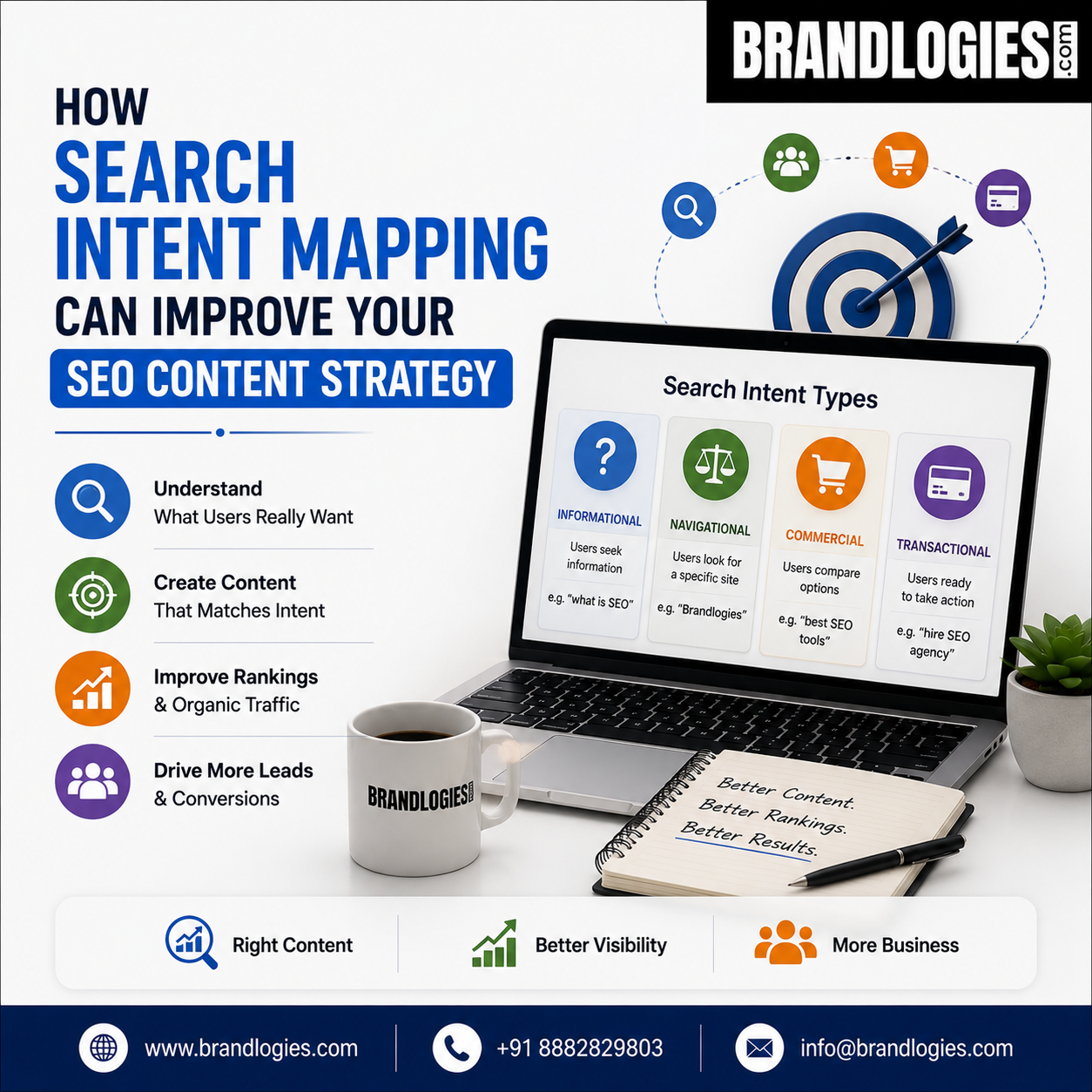
Search intent is commonly grouped into four categories:
- Informational: The user wants to learn something.
- Navigational: The user wants to find a specific website or brand.
- Commercial: The user is researching options before making a decision.
- Transactional: The user is ready to take an action, such as buying or booking.
Understanding these categories helps businesses decide what type of content should be created for each keyword.
1. Start With Your Keyword List
The first step in search intent mapping is collecting your target keywords.
You can use keyword research tools, Google Search Console data, competitor research, and existing website analytics to build a list.
Do not look only at search volume. Consider:
- Relevance to your business
- Search intent
- Competition
- Conversion potential
- Customer journey stage
- Geographic relevance
A keyword with lower search volume can sometimes be more valuable if it closely matches your target customer’s needs.
2. Analyze the Search Results
One of the easiest ways to understand intent is to search the keyword yourself.
Look at the type of pages Google is displaying. Are the top results:
- Blog articles?
- Product pages?
- Service pages?
- Category pages?
- Comparison guides?
- Location pages?
- Videos?
The results provide useful clues about what search engines believe users want.
For example, if most results for a keyword are detailed guides, creating a short promotional service page may not satisfy the expected intent.
3. Match Keywords With the Right Content Type
Once the intent is clear, assign each keyword to the most appropriate content format.
For informational keywords, create educational guides, tutorials, definitions, or how-to articles.
For commercial keywords, consider comparison pages, buyer guides, case studies, and service evaluations.
For transactional searches, service pages, product pages, pricing information, or booking pages may be more appropriate.
This simple process prevents businesses from trying to make one page rank for every type of search.
4. Map Content to the Customer Journey
Search intent can also reveal where someone is in the buying journey.
A person searching “how does SEO work?” may be at the awareness stage. Someone searching “SEO services pricing” is likely further along and evaluating solutions.
Your content strategy should support both audiences.
A strong content funnel might look like:
Educational Content → Commercial Content → Service Page → Enquiry
This allows users to move naturally from learning about a problem to considering your business as a solution.
5. Use Local Intent Where Relevant
For businesses serving specific cities, search intent mapping should include geographic intent.
Consider searches such as:
- SEO agency in Gurgaon
- Interior designer in Noida
- Digital marketing company in Delhi
- Restaurant near me
These searches indicate that location may be an important part of the user’s decision.
Create useful location-focused pages where appropriate and ensure they provide genuine information about the service area rather than simply repeating the same content for different cities.
6. Avoid Creating Multiple Pages for the Same Intent
Another benefit of search intent mapping is that it can reduce unnecessary content duplication.
Businesses sometimes create separate pages for keywords that have almost identical intent. This can make a website difficult to manage and may result in several pages competing for similar searches.
Before creating a new page, ask:
Does this keyword represent a genuinely different search need?
If the answer is no, an existing page may be the better place to address it.
7. Optimize Content Beyond Keywords
Matching intent does not mean simply inserting the target keyword throughout an article.
Your content should answer the user’s questions clearly and efficiently.
Use:
- Clear headings
- Direct answers
- Relevant examples
- Helpful FAQs
- Supporting statistics where appropriate
- Internal links
- Strong calls to action
For commercial and transactional pages, make important information easy to find. Users should quickly understand what you offer, who it is for, and what they should do next.
8. Measure Whether Your Content Is Working
Search intent mapping should not stop once content is published.
Track how each page performs using metrics such as:
- Organic clicks
- Impressions
- Rankings
- Engagement
- Leads
- Conversions
- Conversion rate
If a page receives traffic but produces no meaningful engagement or enquiries, revisit the intent. The keyword may be attracting the wrong audience, or the content may not fully satisfy the searcher’s needs.
How Brandlogies Can Help
Building an effective SEO content strategy requires more than finding keywords. Businesses need to understand the relationship between search intent, content format, customer journey, and business objectives.
Brandlogies can help businesses develop structured SEO strategies that combine keyword research, search intent mapping, content planning, on-page optimization, local SEO, and conversion-focused content.
The goal is to create content that attracts the right audience and gives them a clear reason to continue exploring your website.
Final Thoughts
SEO content works better when it starts with the user’s question rather than the keyword alone.
By understanding why people search, analyzing Google’s results, matching keywords with appropriate content formats, and connecting pages to different stages of the customer journey, businesses can build a more focused content strategy.
Search intent mapping helps turn keyword research into a practical content roadmap—one that can support stronger visibility, better user experiences, and more qualified opportunities.
With the right approach, Brandlogies can help businesses create SEO content that is not only designed to rank but also designed to deliver meaningful business results.

FAQs
1. What is search intent mapping in SEO?
Search intent mapping is the process of identifying the reason behind a search query and matching that intent with the most suitable keyword, content type, and webpage.
2. Why is search intent important for SEO?
Search intent helps businesses create content that answers what users are actually looking for. Better intent alignment can improve relevance, engagement, and the overall effectiveness of SEO content.
3. How can I identify search intent?
Review the keyword, examine Google’s current search results, study the types of pages ranking, and consider what action the user is likely trying to take.
4. Can one keyword have multiple search intents?
Yes. Some keywords can have mixed or changing intent. Analyze the current search results and user context before deciding what type of page to create.
5. Does search intent mapping help generate leads?
Yes. Mapping commercial and transactional keywords to relevant service, product, or landing pages can help connect high-value searches with conversion opportunities.
Can Brandlogies help with search intent mapping?
Yes. Brandlogies can help businesses research keywords, analyze search intent, plan content, optimize pages, and develop SEO strategies focused on relevant traffic and conversions.
Read also – Content Pruning in 2026: Should You Delete Old Blog Posts?