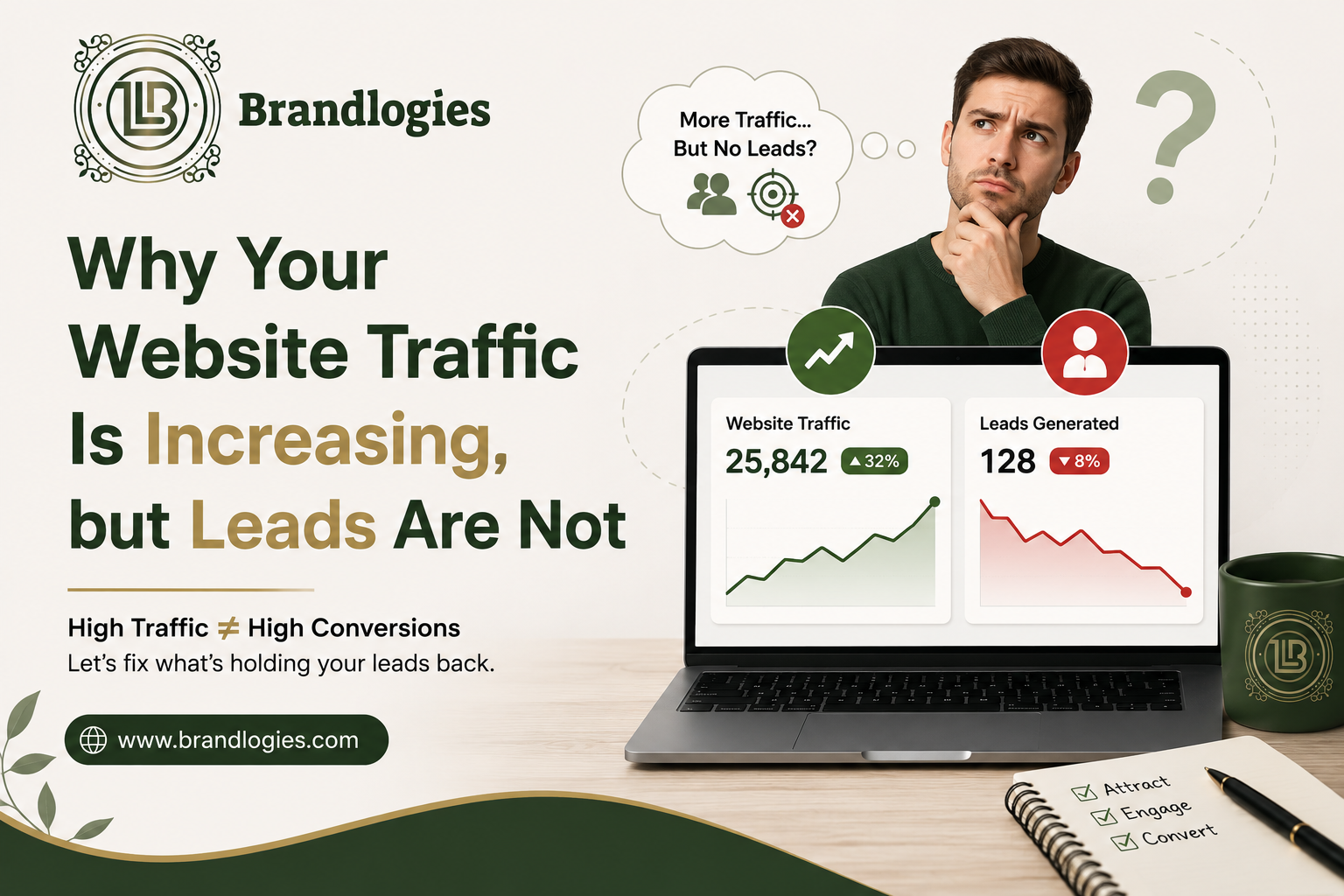
Getting more visitors to your website sounds like a positive sign. But what happens when traffic increases while enquiries, calls, and form submissions remain unchanged? This is a common problem for businesses investing in SEO and digital marketing. High traffic does not automatically mean high-quality leads.
The real issue may be search intent, website experience, targeting, content, or conversion optimization. In this guide, we will explore why website traffic is increasing but leads are not, along with practical ways to turn more visitors into potential customers.
Traffic and Leads Are Not the Same
Website traffic measures the number of people visiting your website. Leads represent visitors who take a valuable action, such as filling out a form, calling your business, requesting a quotation, or making an enquiry.
A website can receive thousands of monthly visitors but generate very few leads if those visitors are not interested in the products or services being offered.
This is why businesses should focus on qualified traffic rather than traffic volume alone.
1. Your Keywords May Not Match Customer Intent
One of the biggest reasons website traffic is increasing but leads are not is poor search intent targeting.
Informational keywords can bring large amounts of traffic from people looking for general information. However, these users may not be ready to purchase.
For example, someone searching “what is SEO” is probably researching the topic. Someone searching “SEO agency in Delhi” has a much stronger commercial intent.
Your SEO strategy should include a combination of informational, commercial, and transactional keywords based on your business goals.
2. Your Website Attracts the Wrong Audience
Traffic from irrelevant locations, industries, or customer segments may increase your analytics numbers without improving enquiries.
For local businesses, geographic targeting is particularly important. If your business serves Delhi, Gurgaon, Noida, or Faridabad, your website should clearly communicate the areas you serve.
Location-specific service pages, local content, Google Business Profile optimization, and relevant local keywords can help attract users who are more likely to become customers.
3. Your Landing Pages Are Not Convincing Visitors
Getting someone to your website is only the first step. The landing page needs to convince them to take action.
A weak landing page may have:
- Unclear service information
- Generic headlines
- Too much text
- Missing trust signals
- Weak calls to action
- Difficult enquiry forms
- Poor mobile design
Every important service page should quickly communicate what you offer, who you help, what makes your business different, and what the visitor should do next.
4. Your Call-to-Action Is Too Weak
Visitors should not have to search for a way to contact your business.
Use clear calls to action such as Get a Free Consultation, Request a Quote, Talk to an Expert, or Book a Call where appropriate.
Place relevant CTAs throughout important pages without making them feel aggressive or repetitive.
5. Your Website Does Not Build Enough Trust
People are unlikely to submit an enquiry if they are unsure about your business.
Add genuine testimonials, case studies, certifications, experience, client results, business information, FAQs, and clear contact details.
Trust becomes even more important for high-value services where customers compare several companies before making a decision.
6. Poor Mobile Experience Can Reduce Conversions
A large percentage of users browse websites through smartphones. If your website loads slowly, has difficult navigation, or requires excessive scrolling, visitors may leave before contacting you.
Check your important pages on different screen sizes. Make sure buttons are easy to tap, forms are simple, and essential information appears clearly.
7. Your Content Answers Questions but Does Not Sell
Educational content can generate organic traffic, but it should also guide relevant visitors toward the next step.
A useful blog can include links to related services, relevant internal pages, downloadable resources, or consultation options. The goal is not to turn every article into an advertisement. Instead, create a natural journey from information to solution.
How Brandlogies Can Help
At Brandlogies, the focus should not simply be on increasing website visitors. A successful digital marketing strategy connects SEO, content, website experience, conversion optimization, and local visibility.
Start by analyzing which pages receive traffic, which keywords generate visitors, where users leave, and which pages produce enquiries. This data can reveal whether the problem is traffic quality or conversion performance.
Frequently Asked Questions
1. Why is my website getting traffic but no leads?
The traffic may not match your target audience or search intent. Other factors can include weak landing pages, unclear CTAs, poor trust signals, and a complicated enquiry process.
2. Does more website traffic always mean more leads?
No. More traffic can increase opportunities, but lead quality and conversion rate matter more than visitor numbers alone.
3. How can I convert more website visitors into leads?
Improve search-intent targeting, landing-page messaging, CTAs, trust elements, mobile usability, page speed, and enquiry forms. Track conversions to identify which changes produce results.
4. Is local SEO important for lead generation?
Yes. Local SEO can help businesses reach customers searching for products or services in specific locations. Optimized location pages, local content, reviews, and Google Business Profile activity can support local visibility.
5. Should I focus on SEO or conversion optimization?
Ideally, both. SEO brings relevant visitors, while conversion optimization helps turn those visitors into enquiries and customers.
Final Thoughts
If website traffic is growing but leads are not, the answer is not always to publish more content or chase higher rankings. The bigger opportunity may be improving traffic quality and conversion performance.
Review your search intent, landing pages, calls to action, local targeting, mobile experience, and trust signals. With the right strategy, your website can move beyond generating visits and become a consistent source of qualified business enquiries.
Read Also – Why Is My Competitor Ranking Higher on Google Maps?