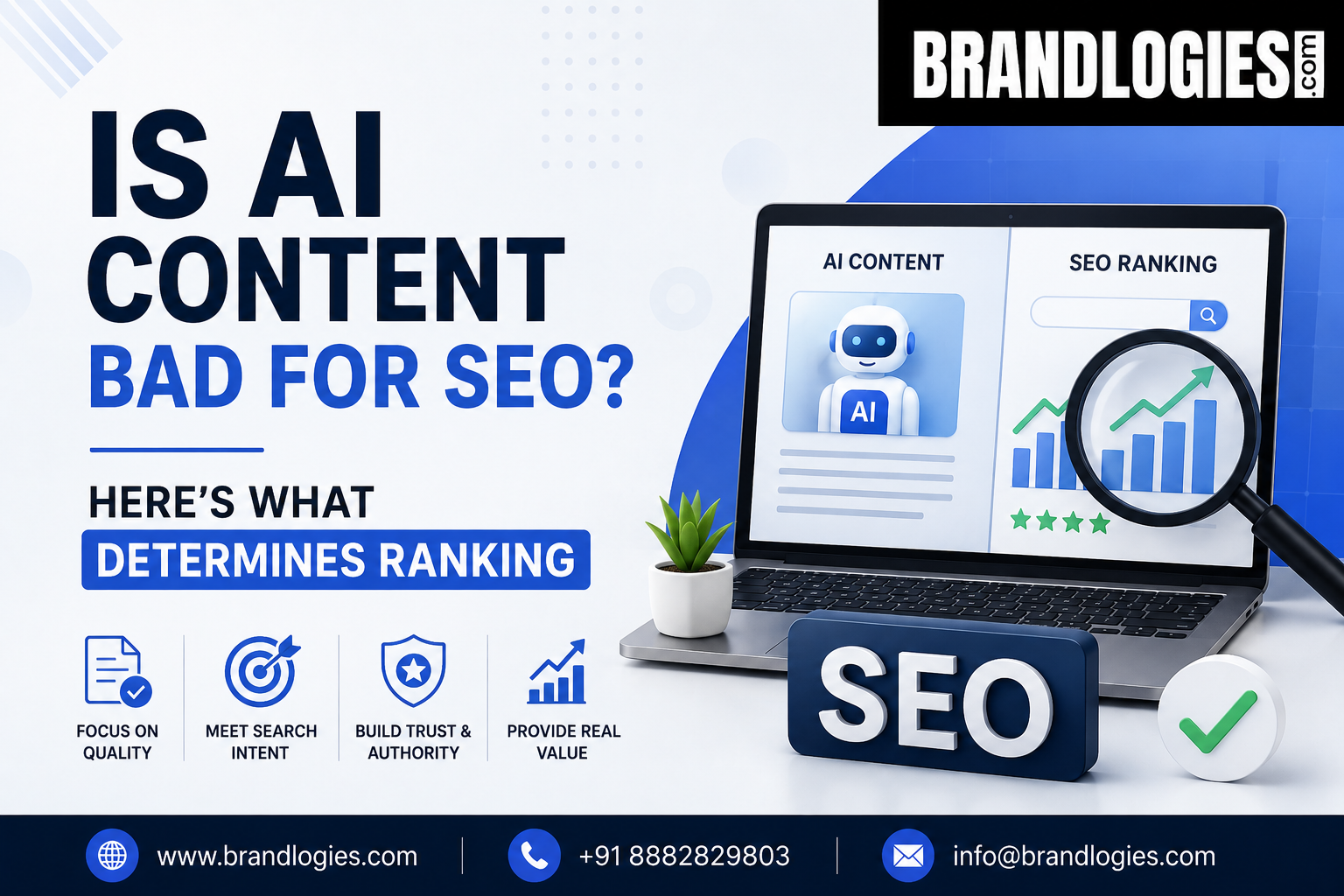
Artificial intelligence has changed the way businesses create content. From blog posts and product descriptions to landing pages and FAQs, AI tools can help marketers produce content faster. But one question continues to concern website owners: Is AI content bad for SEO?
The short answer is no. Using AI does not automatically prevent a page from ranking. What matters is the quality, usefulness, originality, accuracy, and relevance of the content. Search engines aim to provide users with helpful results, regardless of whether content was created entirely by a person, with AI assistance, or through a combination of both.
For businesses investing in SEO in 2026, the goal should not be to hide AI usage. The goal should be to use AI responsibly while maintaining genuine value for readers.
What Actually Determines SEO Rankings?
Search visibility depends on multiple factors. AI content can perform well when it satisfies the same quality expectations as any other content.
Here are the key factors that influence performance.
1. Content Must Satisfy Search Intent
Before creating content, understand why someone is searching for a particular topic.
Someone searching for “SEO services in Delhi” may be looking for an agency, pricing information, service details, or comparisons. A generic article about SEO may not satisfy that intent.
Good content directly addresses what users want to accomplish. It provides relevant answers instead of simply repeating keywords.
At Brandlogies, we recommend starting with search intent before deciding the content format, keyword strategy, or page structure.
2. Original Information Matters
AI can generate grammatically correct content quickly, but generic information is easy to reproduce.
If ten websites publish almost identical explanations of a topic, none has a strong reason to stand out. Add original examples, industry observations, expert commentary, customer questions, case studies, statistics, and practical recommendations.
Human insight can transform AI-assisted content from a basic draft into something genuinely useful.
3. Accuracy Builds Trust
AI-generated content can sometimes contain outdated, incomplete, or incorrect information. Publishing such content without reviewing it can damage both user trust and your SEO performance.
Always fact-check important claims, statistics, product information, industry regulations, and location-specific details.
For businesses targeting markets such as Delhi NCR, Noida, Gurgaon, or other Indian cities, local information should be accurate and relevant to the audience.
4. Experience and Expertise Strengthen Content
Readers want information from sources they can trust.
Include real-world examples, author credentials, project experience, company information, and supporting evidence when appropriate. If your business has completed projects, solved specific customer problems, or developed expertise in a particular industry, use that experience to make your content more valuable.
AI can assist with research and structure, but it cannot replace genuine business experience.
5. Avoid Mass-Producing Low-Value Pages
The biggest SEO risk is not AI itself. It is publishing large amounts of low-quality content simply to attract search traffic.
Creating hundreds of pages with minimal differences, unnecessary keyword variations, or repetitive information can produce a poor experience for visitors.
Instead of asking, “How many articles can we publish this month?” ask, “Which topics can genuinely help our target customers?”
Quality should guide your content calendar.
6. Optimize for Humans First
SEO optimization is important, but content should remain natural.
Avoid forcing the same keyword into every heading and paragraph. Use related terminology naturally, break long sections into readable formats, and answer important questions clearly.
A well-optimized page should be easy to understand on both desktop and mobile devices.
Brandlogies focuses on creating content strategies where SEO supports the reader experience rather than making the writing feel mechanical.
7. Keep Content Updated
Search behavior, industries, technologies, and customer expectations change quickly.
An article that was accurate two years ago may no longer provide the best answer today. Review important pages periodically and update statistics, examples, links, recommendations, and other time-sensitive information.
This is particularly important for topics such as AI search, digital marketing, SEO algorithms, and online advertising.
How to Use AI Without Hurting SEO
AI can be a powerful productivity tool when used correctly. Businesses can use it for brainstorming topics, creating outlines, analyzing search intent, identifying content gaps, improving readability, and generating first drafts.
However, the final content should receive human review.
Add your brand perspective, verify important information, improve examples, remove generic statements, and make sure every section serves a clear purpose.
The strongest approach is AI-assisted, human-directed content.
Is AI Content Bad for SEO?
No. AI content is not automatically bad for SEO. Poor content is the real problem.
If AI helps you create accurate, original, useful, well-structured content that satisfies search intent, it can become part of an effective SEO strategy. But if it is used to mass-produce repetitive pages without meaningful value, your website may struggle to earn visibility and trust.
In 2026, businesses should focus less on whether content was created by AI and more on whether it deserves to rank.
Brandlogies helps businesses build SEO and content strategies designed around search intent, useful information, topical authority, and sustainable organic growth. If your website is using AI content but not generating the visibility or leads you expect, reviewing the quality and strategy behind that content is a smart place to start.

FAQs
Is AI-generated content allowed for SEO?
AI-assisted content can be used for SEO. The important consideration is whether the published content is helpful, accurate, original, and created to serve users rather than manipulate search rankings.
Can AI content rank on Google?
Yes. AI-assisted content can rank when it provides strong value, satisfies search intent, demonstrates relevance, and competes effectively with other results.
Should humans edit AI-generated content?
Yes. Human review is highly recommended, particularly for factual accuracy, originality, brand voice, expertise, and industry-specific information.
Does using AI automatically lower rankings?
No. Simply using AI does not automatically cause a page to lose rankings; the quality and usefulness of the final content matter more.
How can Brandlogies help with AI content SEO?
Brandlogies can help businesses develop content strategies that combine AI-assisted workflows with keyword research, search-intent optimization, human expertise, content quality, and SEO best practices.
Read Also – Why Ranking #1 Isn’t Enough Anymore: The New SEO Reality