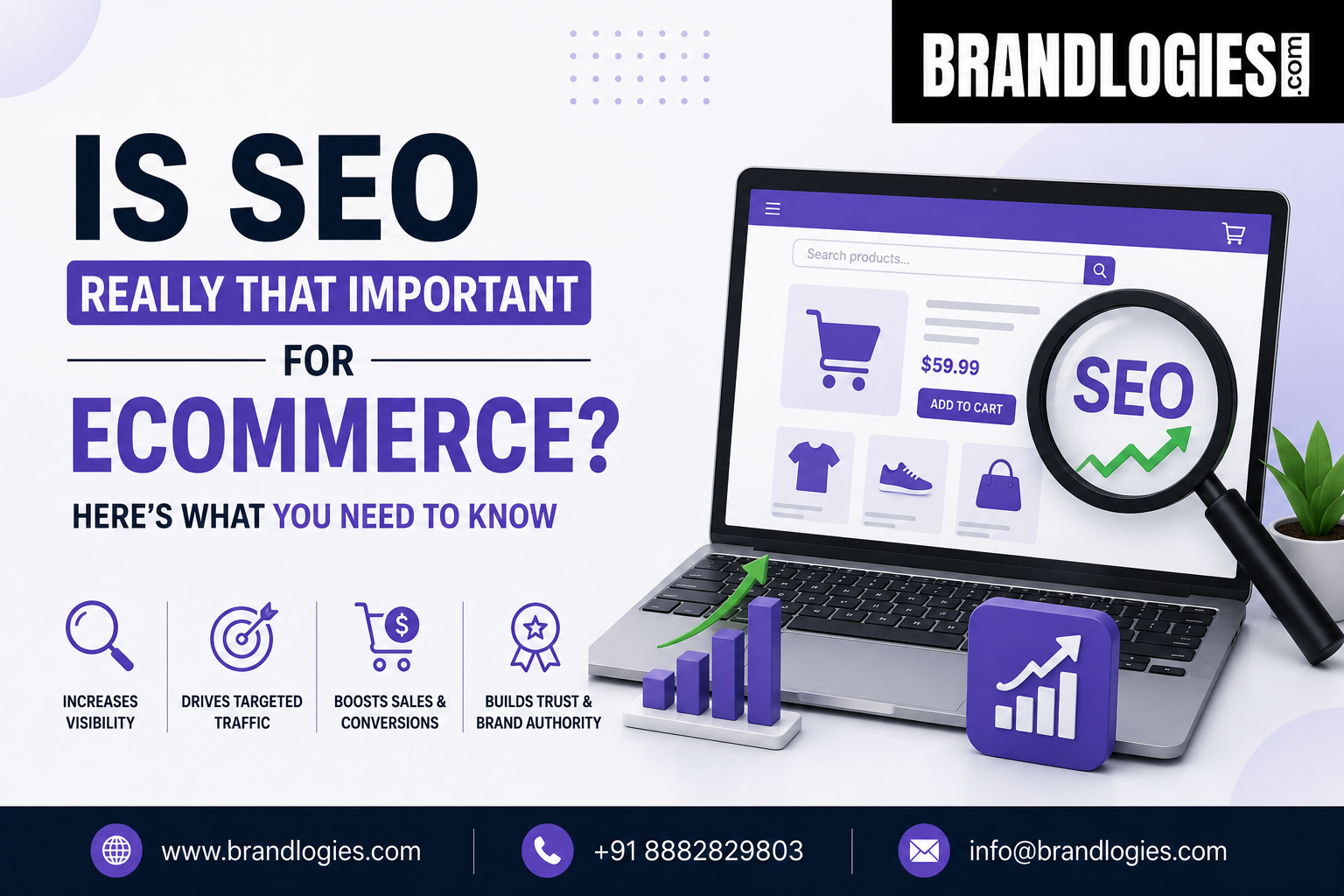
Running an ecommerce business is not just about having great products. Customers need to discover those products before they can buy them. With thousands of online stores competing for attention, simply launching a website is rarely enough. This is where ecommerce SEO becomes important.
Ecommerce SEO helps product pages, category pages, and other important sections of an online store appear when potential customers search for relevant products or solutions. Unlike paid advertising, which stops generating traffic when the budget ends, a strong organic search presence can continue attracting visitors over time.
For ecommerce brands looking to grow in 2026, investing in SEO can be one of the most sustainable ways to build visibility, traffic, and customer trust.
Why Is SEO Important for Ecommerce?
Most online shopping journeys begin with a search. Customers may search for a specific product, compare options, look for reviews, or research prices before making a purchase.
If your ecommerce website does not appear for these searches, competitors have an opportunity to capture that customer.
A well-planned SEO strategy helps your store become visible at different stages of the buying journey. Informational content can attract people researching products, while optimized category and product pages can target users who are closer to purchasing.
1. SEO Helps Customers Discover Your Products
A beautiful ecommerce website does not guarantee traffic.
Your product pages need to be discoverable by search engines and relevant to what customers are searching for. This means optimizing product names, page titles, descriptions, headings, images, URLs, internal links, and other on-page elements.
Keyword research should focus on actual customer behavior rather than simply selecting keywords with the highest search volume.
For example, a customer searching for “best running shoes for beginners” has a different intent from someone searching for “buy running shoes online.” Your content should address both stages appropriately.
2. Organic Traffic Can Reduce Advertising Dependence
Paid advertising can deliver immediate visibility, but it can also become expensive in competitive ecommerce categories.
SEO provides an opportunity to build an additional traffic channel. Once pages establish strong organic visibility, they can continue attracting potential customers without paying for every individual click.
This does not mean ecommerce businesses should stop advertising. Paid campaigns and SEO can work together. Advertising can support immediate sales, while SEO builds long-term visibility.
At Brandlogies, we recommend treating SEO as part of a broader ecommerce growth strategy rather than an isolated marketing activity.
3. SEO Builds Trust Before the Purchase
Customers often research a brand before buying.
They may look for product information, comparisons, customer reviews, return policies, shipping details, or answers to common questions. A website that provides clear and useful information can create greater confidence.
Detailed product descriptions, helpful buying guides, FAQs, reviews, and transparent business information can improve the overall customer experience while supporting organic visibility.
4. Technical SEO Improves the Shopping Experience
Ecommerce websites can become technically complicated because they often contain hundreds or thousands of URLs.
Filters, product variations, duplicate pages, broken links, slow-loading images, and poor mobile experiences can create SEO problems.
Technical SEO helps search engines efficiently crawl and understand your website while also improving usability.
Pay attention to:
- Mobile performance
- Page speed
- Internal linking
- Structured data
- XML sitemaps
- Canonical URLs
- Indexing
- Broken links
- Core Web Vitals
A technically healthy ecommerce store gives both search engines and customers a better experience.
5. Local SEO Can Help Ecommerce Businesses Too
Even online-first businesses can benefit from local search visibility, especially when they have physical stores, warehouses, service areas, or local delivery options.
For example, an ecommerce brand serving Delhi NCR can create useful location-specific information around delivery areas, pickup options, or local customer needs.
Accurate business information and consistent local signals can help customers discover relevant products and services in nearby locations.
6. Content Can Support Product Sales
Not every customer is ready to buy immediately.
Some may search for product comparisons, maintenance advice, buying guides, or solutions to specific problems. Creating useful content allows ecommerce brands to reach these customers earlier in the buying journey.
For example, a skincare store could publish content about choosing products for different skin concerns, while a technology retailer could create guides comparing devices for different user requirements.
When these articles naturally connect to relevant product and category pages, content can help move visitors toward a purchase.
7. SEO Supports Long-Term Ecommerce Growth
Ecommerce SEO is not a quick fix. Rankings can take time, and competitive industries require consistent optimization.
However, the long-term benefits can be significant. Better visibility can lead to more qualified traffic, stronger brand awareness, improved customer trust, and additional opportunities for conversions.
The key is to measure more than rankings. Track organic traffic, product-page impressions, clicks, conversions, revenue, and the keywords generating valuable customers.
Is SEO Really Important for Ecommerce?
Absolutely. Ecommerce SEO can help online stores become easier to discover, attract customers throughout the buying journey, and build a sustainable source of organic traffic.
However, SEO should never be treated as simply inserting keywords into product descriptions. Successful ecommerce SEO combines technical optimization, search intent, quality content, product-page optimization, internal linking, user experience, and trustworthy brand signals.
Brandlogies helps businesses create SEO strategies designed around visibility, qualified traffic, and measurable growth. If your ecommerce website receives traffic but struggles to generate consistent organic sales, a detailed SEO audit can reveal opportunities for improvement.
The question is not whether ecommerce businesses need SEO. The better question is whether your competitors are already using it to reach the customers you want.

FAQs
1. Is SEO necessary for an ecommerce website?
SEO is not legally required, but it is highly valuable for ecommerce businesses that want consistent organic visibility and discoverability.
2. How does SEO increase ecommerce sales?
SEO can bring relevant visitors to product and category pages. When those pages provide a strong user experience and clear purchasing information, organic traffic can contribute to more conversions.
3. How long does ecommerce SEO take?
Results vary depending on competition, website authority, technical health, content quality, and the keywords being targeted. Consistent optimization is generally required for sustainable results.
4. Should ecommerce businesses use SEO and paid ads together?
Yes. Paid advertising can provide immediate visibility, while SEO can build long-term organic traffic. Using both channels can create a more balanced acquisition strategy.
5. Can Brandlogies help with ecommerce SEO?
Yes. Brandlogies can help businesses with keyword research, technical SEO, content strategy, on-page optimization, local SEO, and broader search visibility strategies designed to support ecommerce growth.
Read Also – Brand SERP Optimization: Controlling Your Online Search Presence