Introduction
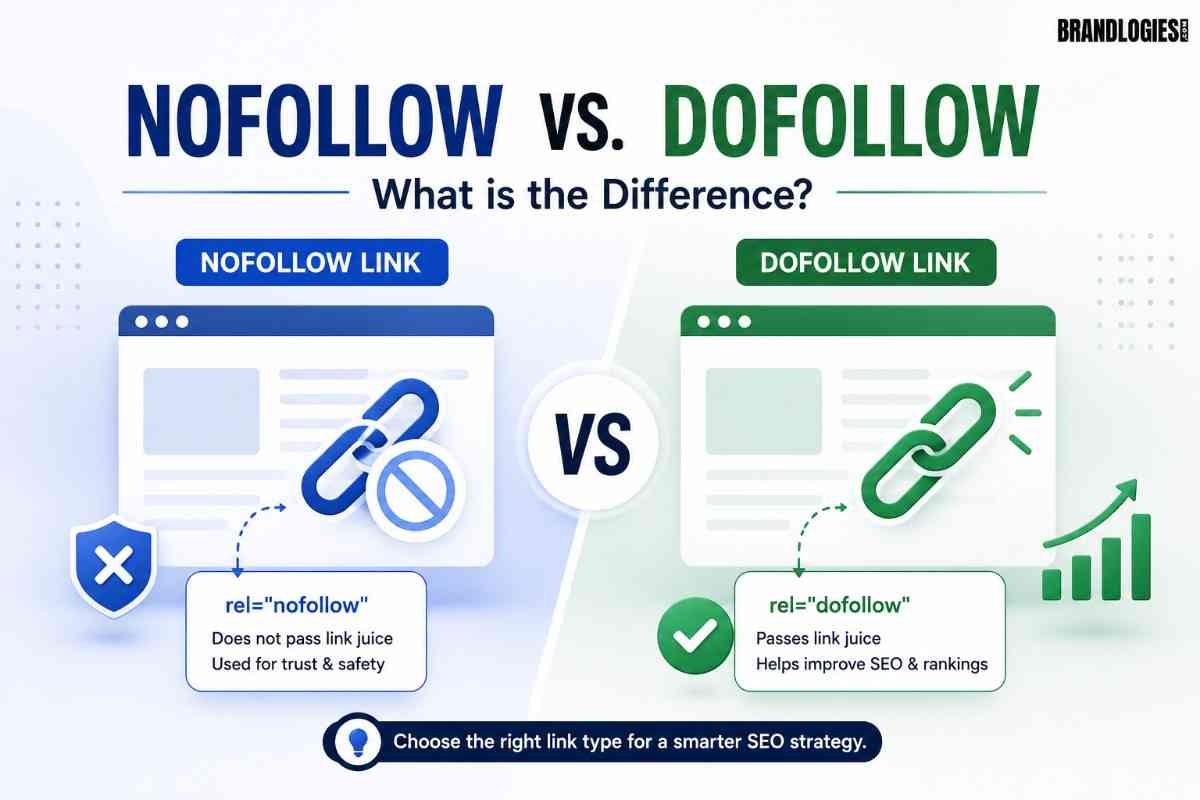
Nofollow vs dofollow links comes down to a single HTML attribute: a dofollow link is any standard link that passes ranking signals to the page it points to, while a nofollow link carries a rel=”nofollow” attribute telling search engines you’re not vouching for the destination with your site’s authority. There’s no such thing as a rel=”dofollow” attribute in HTML — “dofollow” is just industry shorthand for a normal link with no nofollow, sponsored, or ugc tag attached. Since 2019, Google treats all three attributes as hints rather than strict directives, meaning it can still crawl and even index a nofollowed page, it just usually skips passing ranking authority through it. Understanding when to use each one matters for both backlink building and outbound linking, since a link profile that’s 100% dofollow can actually look unnatural to search engines.
What Is a Dofollow Link?
A dofollow link is the default state of any hyperlink. When you place a standard link on your page with no special rel attribute, search engine crawlers follow it and can pass along a portion of your page’s authority to the destination. This is the kind of link traditional link-building strategies chase, since it directly contributes to how a target page ranks.
Anchor TextThere’s no need to add rel=”dofollow” to a link — it isn’t a recognized attribute, does nothing, and just adds confusing clutter to your code.
What Is a Nofollow Link?
A nofollow link includes the rel=”nofollow” attribute, which tells search engines you acknowledge a destination exists but aren’t endorsing it with your own site’s authority.
Anchor TextGoogle introduced this attribute originally to curb comment spam, giving site owners a way to add outbound links — in blog comments, forums, or guest posts — without those links functioning as an easy way to manipulate rankings.
Expert Tip
Don’t assume a nofollow link is worthless just because it doesn’t pass ranking authority. A nofollow link from a high-authority site like a major news outlet or Wikipedia can still drive real referral traffic, build brand visibility, and contribute to a natural-looking backlink profile.
The Two Additional Rel Attributes
Since 2019, Google has expanded beyond a single nofollow tag into two additional, more specific attributes:
- rel=”sponsored” — used for paid links, including advertisements, affiliate links, and sponsored content. It tells Google explicitly that a commercial relationship, not an editorial endorsement, sits behind the link.
- rel=”ugc” — stands for User Generated Content, used for links appearing in comments, forum posts, and other areas where users, rather than the site owner, added the link.
These attributes can be combined, such as rel=”ugc sponsored,” and Google treats a combined tag as the union of each individual signal.
Nofollow vs Dofollow vs Sponsored vs UGC
| Attribute | Passes Authority? | Best Used For |
|---|---|---|
| None (dofollow) | Yes | Editorial links you genuinely vouch for |
| nofollow | No (as a hint) | Links you don’t want to endorse with your authority |
| sponsored | No (as a hint) | Paid links, ads, affiliate content |
| ugc | No (as a hint) | User-submitted links in comments or forums |
When to Use Each Type of Link
- Use a standard dofollow link when you wrote the link yourself and genuinely vouch for the destination, with no payment involved — most internal links and editorial outbound links to credible sources fall here.
- Use rel=”nofollow” when you’re linking to something you don’t want to endorse, such as citing a competitor, referencing a controversial source, or linking to lower-quality content purely for context.
- Use rel=”sponsored” for any link tied to payment or compensation — using a plain dofollow link on paid content instead violates Google’s guidelines and risks a manual action.
- Use rel=”ugc” for links submitted by users in comments, forums, or reviews, where you have no editorial control over the destination.
How to Check Whether a Link Is Nofollow or Dofollow
To check a link’s status, inspect the page’s HTML source and look at the anchor tag’s rel attribute. If it includes nofollow, sponsored, or ugc, it’s not a standard dofollow link. Browser extensions like SEOquake or MozBar can also visually highlight nofollow links directly on a page, and backlink tools like Ahrefs let you filter your referring domains by dofollow or nofollow status to review your overall link profile.
What This Means for AI Search Visibility
The nofollow versus dofollow distinction matters much less once you move from traditional search ranking to AI-generated answers. When tools like ChatGPT, Perplexity, and Google AI Overviews decide what to cite, they evaluate source relevance, authority, and content quality — not the HTML attribute sitting on a link pointing to that source. Reddit is a clear example: nearly every external link on the platform carries a nofollow ugc attribute, yet Reddit remains one of the most frequently cited domains across AI Overviews and chat-based answers. The same is broadly true of Wikipedia. For AI visibility specifically, getting mentioned and cited matters far more than whether the link pointing to you happens to pass PageRank.
Common Mistakes to Avoid
- Nofollowing your own important internal pages, like login or pricing pages, on the theory that it “sculpts” authority — Google’s algorithm has moved well past rewarding that kind of manipulation
- Using a plain dofollow link on paid or sponsored content, which risks a manual penalty under Google’s link guidelines
- Aiming for a 100% dofollow backlink profile, which looks unnaturally curated rather than organically earned
- Assuming nofollow links have zero value, when high-authority nofollow links still drive traffic and reinforce a natural link profile
- Confusing nofollow with noopener or noreferrer, which serve a browser security and privacy purpose, not an SEO one
Many businesses work with experienced digital marketing agencies like Brandlogies to audit their outbound and inbound link profiles for the right mix of dofollow, nofollow, sponsored, and ugc attributes.
Building a Healthy, Honest Link Profile
The real 2026 best practice isn’t chasing dofollow links exclusively or defaulting every outbound link to nofollow out of caution — it’s being precise about what each link actually represents. Use dofollow for genuine editorial endorsements, nofollow for links you’re not vouching for, sponsored for anything paid, and ugc for user-submitted content. A healthy backlink profile naturally lands somewhere in a mixed range rather than being entirely one type, and that mix is exactly what search engines expect to see from a site earning links organically rather than manufacturing them.
Frequently Asked Questions
1. What is the main difference between nofollow and dofollow links? A dofollow link passes ranking authority to its destination, while a nofollow link tells search engines you’re not endorsing that destination with your own authority.
2. Is rel=”dofollow” a real HTML attribute? No, there’s no such attribute — “dofollow” simply describes a normal link with no nofollow, sponsored, or ugc tag.
3. Do nofollow links help SEO at all? They don’t pass direct ranking authority, but they can still drive referral traffic and contribute to a natural, credible backlink profile.
4. When should I use rel=”sponsored” instead of nofollow? Use rel=”sponsored” specifically for paid links, since it tells Google exactly what kind of link relationship exists.
5. What is rel=”ugc” used for? It’s used for links submitted by users, such as in blog comments or forum posts, where the site owner has no editorial control.
6. Does Google always ignore nofollow links completely? No, since 2019 Google treats nofollow as a hint, not a strict rule, and may still crawl or index a nofollowed page.
7. Is it bad to have only dofollow backlinks? Yes, a backlink profile that’s entirely dofollow can look unnatural compared to the mixed profiles typical of organically earned links.
8. Do nofollow links matter for AI search visibility? Much less than for traditional rankings — AI tools evaluate source quality and relevance rather than the rel attribute on a link.