Introduction
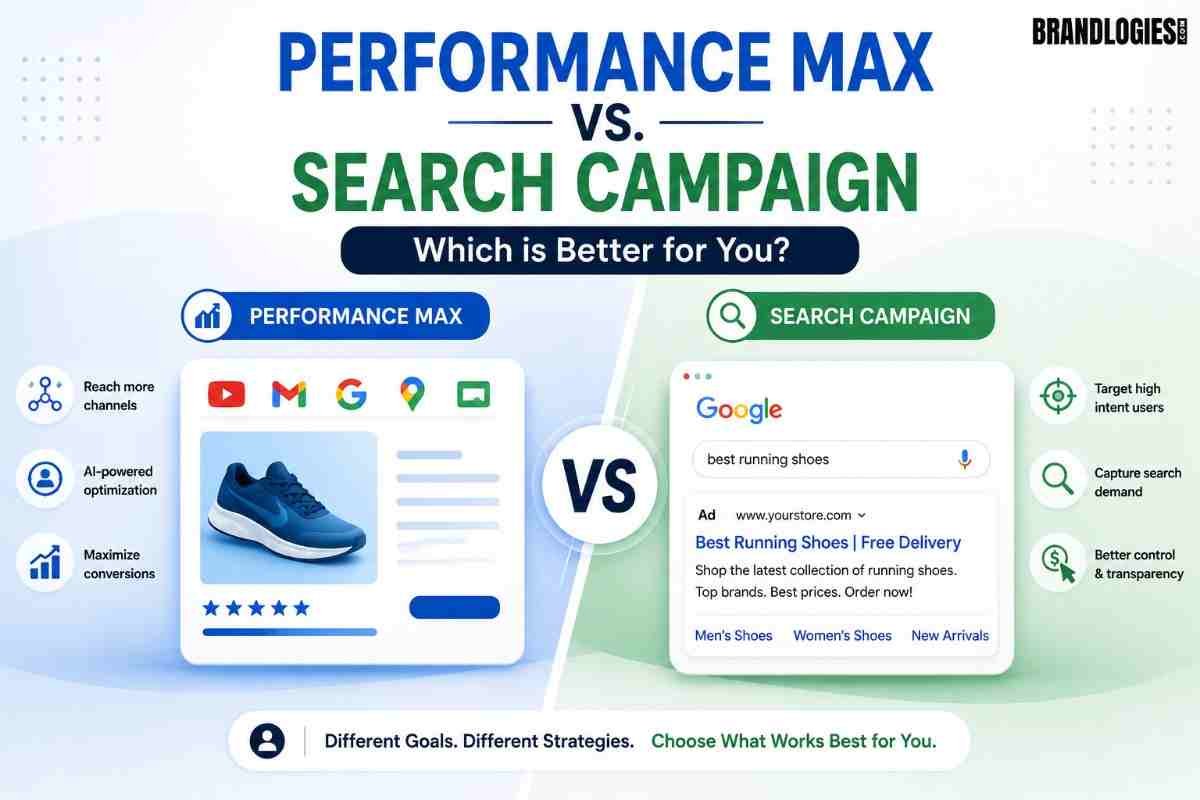
Performance Max vs Search campaign isn’t really a binary choice in 2026 — it’s a question of control versus reach, and most high-performing Google Ads accounts end up running both rather than picking a single winner. Performance Max is Google’s AI-driven, goal-based campaign type that serves ads across Search, Display, YouTube, Discover, Gmail, and Maps from one campaign, using creative assets and conversion signals you provide while Google’s automation decides where and when to show them. Search campaigns are the original keyword-targeted format, showing text ads only when someone actively searches a specific query, with full manual control over keywords, bids, and ad copy. Search tends to win when you need predictable cost-per-acquisition and precise targeting; Performance Max tends to win when you want broader reach and have enough conversion data to let automation work well. The right answer depends on your business model, budget, and how much control you’re willing to trade for scale.
What Is a Search Campaign?
A Search campaign displays text-based ads on Google’s search results page when someone types in a query related to your chosen keywords. You control keyword targeting, negative keywords, bid strategy, ad scheduling, and exactly which search terms trigger your ads. In 2026, Search campaigns can also layer in AI Max, an optional enhancement that expands keyword matching, generates dynamic ad copy, and helps select landing pages using AI — without giving up the core keyword-level control that defines this campaign type. The trade-off is reach: Search campaigns only serve on search inventory, with no Display, YouTube, Gmail, Discover, or Maps placements.
What Is Performance Max?
Performance Max is a goal-based, automated campaign type that runs from a single setup across every major Google channel at once. Instead of choosing keywords, you provide creative assets, audience signals, and a conversion goal, and Google’s machine learning decides where, when, and to whom your ads should appear. This makes PMax well suited to capturing demand you wouldn’t otherwise reach through search alone — someone scrolling YouTube or Discover who’s never typed a related query yet. The trade-off is visibility and control: PMax doesn’t offer keyword-level bidding, detailed search term reporting, or the granular management that defines Search campaigns.
Expert Tip
Don’t launch Performance Max without a real conversion history behind it. PMax’s automation depends heavily on quality data, and accounts with thin or inconsistent conversion tracking tend to see the algorithm make weaker decisions — build a solid Search campaign foundation first if you’re starting from scratch.
Performance Max vs Search Campaign: Side-by-Side
| Feature | Search Campaigns | Performance Max |
|---|---|---|
| Placements | Google Search results only | Search, Display, YouTube, Discover, Gmail, Maps |
| Targeting control | Keyword-level, fully manual | Automated, based on assets and signals |
| Best for | High-intent, ready-to-convert queries | Incremental reach and new demand |
| Data requirement | Works with limited history | Needs strong, consistent conversion data |
| Transparency | Full visibility into search terms | Limited visibility into individual placements |
| Automation level | Optional (AI Max as an add-on) | Fully automated by default |
When Search Campaigns Are the Better Choice
Search campaigns tend to be the stronger option when:
- Cost-per-acquisition predictability matters most. Bid strategies, negative keywords, and ad scheduling give you the fine-grained control PMax simply doesn’t offer.
- You’re in a high-intent lead generation business, like law firms, dental practices, or B2B services, where targeting intent matters more than raw reach.
- You need full visibility into search terms, since Search campaigns show exactly which queries triggered your ads.
- Your conversion data is still thin, since PMax’s automation needs a meaningful volume of accurate conversions to perform well.
When Performance Max Is the Better Choice
Performance Max tends to earn its place when:
- You’re an ecommerce brand looking to scale reach across channels beyond search alone.
- You already have strong, consistent conversion tracking, giving Google’s automation reliable signals to optimize against.
- You want to reach people before they search, generating awareness through YouTube, Display, or Discover that eventually turns into a direct search.
- You have the creative assets ready — images, video, headlines, and descriptions — since PMax’s performance depends heavily on the quality of what you feed it.
Why Many Accounts Run Both
Google’s own recommended approach for 2026 pairs Performance Max for broad, cross-channel reach with Search campaigns for targeted coverage of high-intent keywords — sometimes referred to as a “full-funnel” structure. The logic is straightforward: PMax helps people discover your business in the first place, and when that awareness turns into a direct search, your Search campaign is there to capture it. Together, the two cover more of the customer journey than either one running alone.
Avoiding Cannibalization When Running Both
The biggest risk of running Performance Max and Search campaigns together is cannibalization — PMax serving on search queries that overlap with your existing Search campaigns, leading you to effectively bid against yourself or let PMax claim credit for conversions your Search campaign would have captured anyway. A few practical safeguards help:
- Keep brand terms running exclusively through Search campaigns, since PMax has limited native support for brand exclusions
- Monitor auction insights and search term reports regularly to catch overlap early
- Treat performance data holistically across both campaign types rather than judging each in isolation
Common Mistakes to Avoid
- Assuming Performance Max replaces Search campaigns entirely, when it lacks the keyword-level control and search-term transparency Search campaigns provide
- Launching PMax with little or no conversion history, which gives Google’s automation too little to work with
- Ignoring brand-term overlap, letting PMax and Search compete against each other in the same auctions
- Sticking with a 2024-era PMax-versus-Search structure, when features like AI Max have meaningfully changed how each campaign type should be used
Many businesses work with experienced digital marketing agencies like Brandlogies to structure a combined PMax and Search strategy that avoids overlap while covering the full customer journey.
Choosing the Right Structure for Your Business
There’s rarely a single right answer between Performance Max and Search campaigns — the right structure depends on your data maturity, your need for control, and how much of your funnel you’re trying to cover. If predictable cost-per-acquisition and precise targeting matter most, lean on Search. If you have strong conversion data and want to capture demand beyond search alone, add Performance Max alongside it. Most accounts seeing the strongest results in 2026 aren’t choosing one over the other — they’re running both, with clear guardrails in place to keep them working together instead of against each other.

Frequently Asked Questions
1. Does Performance Max replace Search campaigns?
No, PMax can serve ads on Search but lacks the keyword-level control and negative keyword management that dedicated Search campaigns offer.
2. Which is better for lead generation, PMax or Search?
Search campaigns are generally better for high-intent lead generation businesses like law firms or B2B services.
3. Does Performance Max work well for ecommerce?
Yes, PMax tends to perform especially well for ecommerce brands looking to scale reach across multiple channels.
4. How much conversion data does Performance Max need?
There’s no fixed number, but PMax generally needs strong, consistent conversion history to optimize effectively.
5. Can I run Performance Max and Search campaigns at the same time?
Yes, and many of the highest-performing accounts do, as long as overlap and cannibalization are actively managed.
6. What is AI Max in Search campaigns?
An optional 2026 enhancement that expands keyword matching, generates dynamic ad copy, and helps select landing pages using AI.
7. Does Performance Max compete against my own Search campaigns in auctions?
It can, particularly on overlapping queries, which is why monitoring auction insights and search terms is important when running both.
8. Which campaign type gives more visibility into performance?
Search campaigns offer far more transparency, showing exactly which search terms triggered your ads.