Introduction
A Google Ads optimization checklist is a repeatable system for auditing, fixing, and scaling campaigns across Search, Performance Max, Demand Gen, and AI Max, covering everything from account structure and bidding to tracking, creative, and reporting. Google Ads runs on a meaningfully different engine than it did just a couple of years ago — AI Max has become the platform’s fastest-growing Search product, campaign-level negative keywords and account-level placement exclusions have expanded automation options, and AI-generated ad variations now sit alongside traditional responsive search ads. Optimization in 2026 isn’t a one-time fix; it’s a gradual, iterative process, and this checklist walks through the areas that consistently separate accounts wasting budget from ones scaling profitably.
1. Start With Technical Notifications
Before touching bids, keywords, or creative, check the notifications inside Google Ads. Policy issues, billing problems, tracking errors, and disapproved ads often hide here, and any one of them can quietly throttle performance no matter how well the rest of the account is structured.
2. Audit Account Structure
Campaigns should be separated by business objective, product line, or region, rather than lumped into broad, catch-all structures. For businesses running multiple markets or locations, keeping budgets strictly isolated by segment prevents Google’s algorithm from cannibalizing spend between areas that should be performing independently.
3. Review Conversion Tracking and Labeling
Label conversions clearly as primary or secondary. Primary conversions — purchases, qualified leads — should be what drives your automated bidding strategy, while secondary conversions, like newsletter signups or content downloads, provide useful insight without skewing bid decisions toward lower-value actions.
4. Do Weekly Search Terms Work
Reviewing search term reports at least weekly remains one of the simplest, highest-impact optimizations available. Identifying which queries are actually converting, and adding irrelevant ones as negative keywords, directly improves traffic quality and tends to lower cost per lead without requiring any bigger structural change.
Expert Tip
Don’t skip search terms work just because a campaign is running on Smart Bidding. Automated bidding still benefits from clean, relevant traffic — feeding it irrelevant queries just gives the algorithm worse signals to learn from.
5. Check Budget Pacing
Watch for the “Limited by budget” warning, and pay attention to campaigns getting eligible impressions that never actually serve. When campaigns hit their daily cap too early, it disrupts the algorithm’s ability to learn consistently, particularly for Smart Bidding strategies that depend on steady, uninterrupted data flow throughout the day.
6. Audit Responsive Search Ads and Asset Groups
Review asset performance ratings across your responsive search ads, and replace anything rated “Poor” or “Low” right away. A well-built RSA generally needs a solid spread of headlines and descriptions covering your core value proposition, specific customer pain points, and clear calls-to-action. Avoid pinning headlines unless message control is essential, since excessive pinning limits how much Google’s optimization can actually do.
7. Review Quality Score and Ad Relevance
Check whether your ads are genuinely matching the intent behind the search terms triggering them, and review Quality Scores across your top campaigns. Low relevance often traces back to overly broad ad groups — organizing ad groups around tightly specific themes tends to improve both relevance and cost efficiency.
8. Confirm Landing Page Alignment
Make sure every landing page matches the message in the ad that sent someone there. A mismatch between ad copy and landing page content is one of the more common, avoidable reasons for high bounce rates and wasted spend.
9. Evaluate Your Bidding Strategy
Set clear ROAS or CPA goals to guide your bidding strategy, and review whether your current approach still fits. Manual CPC across the board has become increasingly uncommon, with most modern accounts transitioning toward Smart Bidding once there’s enough consistent conversion data to support it.
10. Use Ad Scheduling and Device Adjustments
Review performance by time of day and device, and adjust bids or scheduling accordingly. Serving ads at optimal times, and bidding differently based on device performance, helps direct budget toward the moments most likely to convert.
11. Treat AI Recommendations as a Second Opinion, Not a Directive
Google’s optimization score, along with newer AI tools built into the platform, can surface useful recommendations and catch issues between manual reviews. But these tools don’t replace strategic judgment — treat them as an additional set of eyes, and weigh every suggestion against your actual business goals before applying it.
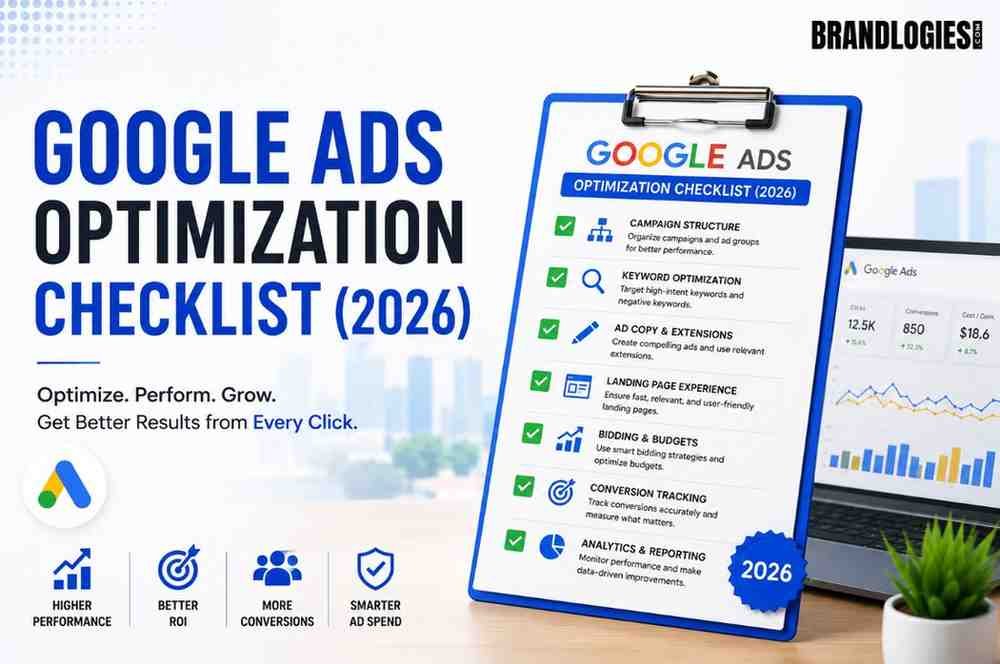
Quick-Reference Checklist
| Area | What to Check | Frequency |
|---|---|---|
| Technical notifications | Policy, billing, tracking issues | Before any other optimization |
| Account structure | Campaign segmentation by objective/region | Quarterly |
| Conversion tracking | Primary vs secondary conversion labeling | At setup, then as goals change |
| Search terms | Irrelevant queries, negative keywords | Weekly |
| Budget pacing | “Limited by budget” warnings | Weekly |
| RSAs and assets | Asset ratings, headline/description mix | Biweekly |
| Quality Score | Ad relevance, ad group themes | Monthly |
| Landing pages | Message match with ad copy | At launch, then as ads change |
| Bidding strategy | ROAS/CPA goals vs current strategy | Monthly |
| Scheduling and devices | Performance by time and device | Monthly |
Common Mistakes to Avoid
- Skipping search terms review for weeks at a time, letting irrelevant traffic quietly drain budget
- Choking campaign budgets too tightly, which disrupts Smart Bidding’s ability to learn from consistent data
- Over-pinning RSA headlines, limiting Google’s ability to test and optimize creative combinations
- Following the optimization score blindly, without weighing recommendations against actual business goals
- Ignoring landing page alignment, sending clicks to pages that don’t match what the ad promised
Many businesses work with experienced digital marketing agencies like Brandlogies to run this kind of structured optimization process consistently across their Google Ads accounts.
Making Optimization an Ongoing Habit
Google Ads optimization isn’t a task you finish once — it’s a recurring discipline that keeps an account efficient as competition, costs, and platform features continue to shift. Start with technical notifications and account structure, stay on top of search terms and budget pacing weekly, and review creative, Quality Score, and bidding strategy on a regular monthly cadence. Use AI tools and the optimization score as helpful input, not the final word. Accounts that treat this checklist as routine maintenance, rather than an occasional fire drill, are the ones that keep scaling efficiently instead of quietly bleeding budget.

Frequently Asked Questions
1. How often should I optimize my Google Ads account?
Search terms and budget pacing deserve weekly attention, while creative, Quality Score, and bidding strategy are usually reviewed monthly.
2. What should I check first when auditing a Google Ads account?
Technical notifications — policy issues, billing problems, and tracking errors can all quietly undermine performance before you even look at bids or keywords.
3. Does Smart Bidding remove the need for search terms review?
No, clean, relevant traffic still improves the signals Smart Bidding relies on to optimize effectively.
4. What does “Limited by budget” mean in Google Ads?
It means your campaign is hitting its daily budget cap before the day ends, which can disrupt learning for Smart Bidding strategies.
5. Should I follow Google’s automated optimization score recommendations?
Use it as a helpful reference, but always weigh suggestions against your actual business goals before applying them.
6. How many headlines and descriptions should a responsive search ad have?
A well-rounded RSA generally includes a mix covering your value proposition, specific pain points, and clear calls-to-action.
7. Why does landing page alignment matter for Google Ads performance?
A mismatch between ad messaging and landing page content often leads to higher bounce rates and wasted ad spend.
8. Is manual CPC bidding still relevant in 2026?
It’s become less common as most accounts with sufficient conversion data shift toward Smart Bidding strategies instead.
Read Also – [2026] Google Keyword Planner Update 2026 – Forecast Views