Search engines have become much better at understanding meaning, context, relationships, and user intent. Simply adding the same keyword repeatedly to a page is no longer enough to achieve strong visibility. Businesses now need content that clearly explains a topic, answers related questions, and provides useful information for real users.
This is where Semantic SEO Strategies become important. Instead of focusing only on individual keywords, semantic optimization helps search engines understand the complete subject of a webpage. For businesses working with an experienced digital marketing agency such as Brandlogies, this approach can support stronger rankings, better visibility, and more qualified organic traffic.
What Is Semantic SEO?
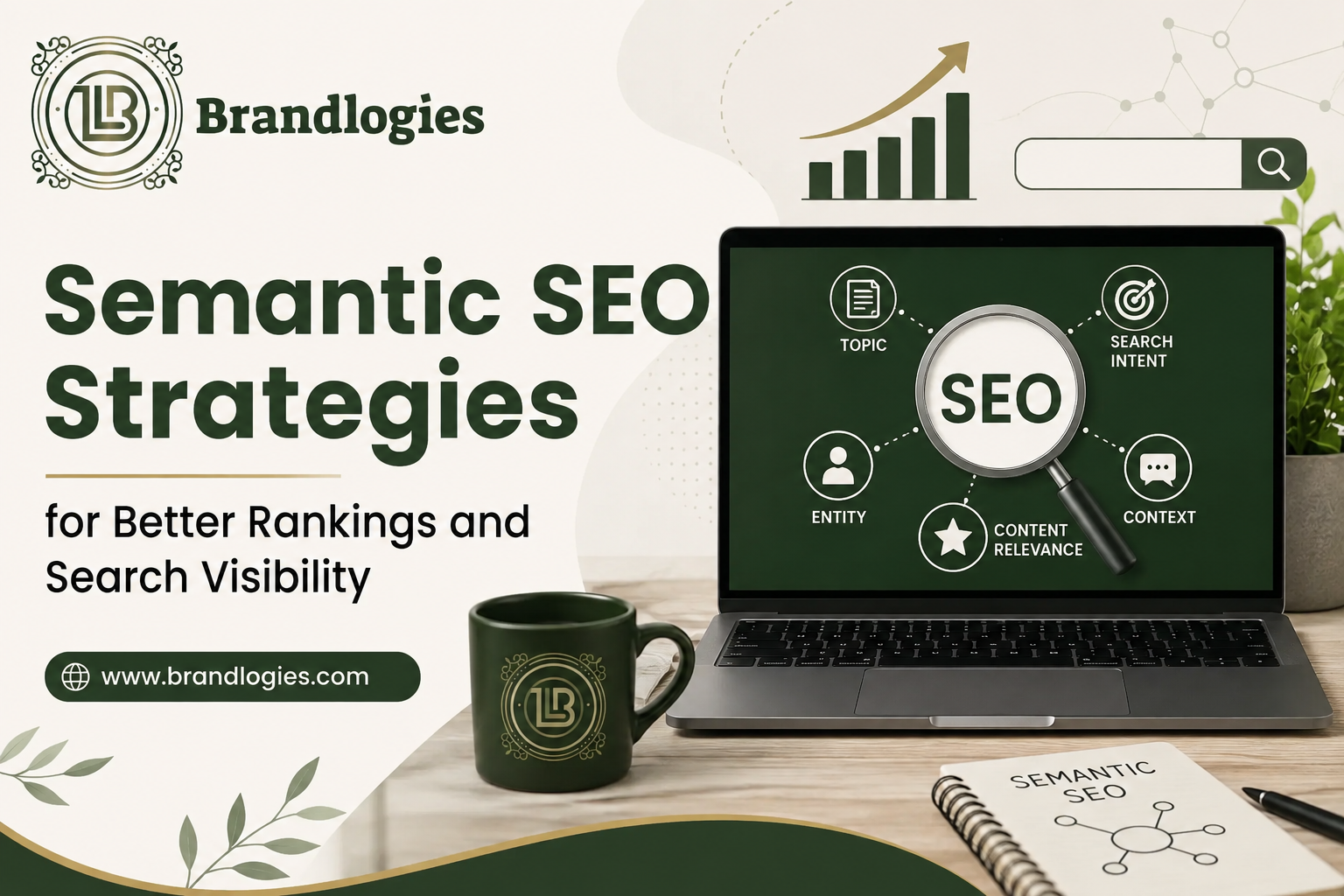
Semantic SEO is the process of creating and optimizing content around a topic, its related concepts, entities, and search intent. It helps search engines understand what a page means rather than simply identifying the keywords used on it.
For example, a page about “digital marketing” can naturally cover SEO, content marketing, social media, paid advertising, conversion optimization, analytics, and lead generation. These connected concepts provide context and make the content more comprehensive.
Effective Semantic SEO Strategies focus on topical relevance instead of keyword repetition.
Why Semantic SEO Matters in 2026
Search technology is increasingly focused on understanding natural language and the purpose behind searches. Users may phrase the same requirement in several different ways, while search engines can connect those variations to a common topic.
Businesses that adopt Semantic SEO Strategies can benefit from:
- Better topical relevance
- Stronger search visibility
- Improved rankings for related searches
- More natural content
- Better user experience
- Greater opportunities for AI-generated search results
- More qualified organic traffic
The objective is not to manipulate search engines. It is to make a website genuinely useful for people searching for a particular solution.
1. Focus on Search Intent
One of the most important Semantic SEO Strategies is understanding what users actually want when they search.
Search intent generally falls into categories such as informational, navigational, commercial, and transactional. A person searching “what is local SEO” needs educational content, while someone searching “SEO agency near me” may be ready to contact a service provider.
Before creating content, identify the question behind the search. Then structure the page around that requirement.
2. Build Topic Clusters
A single article rarely covers every aspect of a broad subject. Topic clusters allow businesses to create a central pillar page supported by related articles.
For example, a digital marketing website can create a main page about SEO and supporting content covering technical SEO, local SEO, keyword research, link building, content optimization, and analytics.
This is one of the most practical Semantic SEO Strategies because it establishes relationships between relevant pages and helps demonstrate topical depth.
3. Use Related Terms Naturally
Semantic optimization does not mean adding random synonyms. Instead, identify words and concepts that naturally belong to the subject.
For an article about local SEO, related concepts could include Google Business Profile, local citations, reviews, NAP consistency, location pages, maps, and local search intent.
Using these terms naturally gives search engines additional context while making the content more useful for readers.
4. Optimize Content for Questions
Answer-focused content can improve visibility for users looking for quick information. Add relevant questions as headings and provide direct, accurate answers underneath them.
For example:
What is semantic SEO?
Semantic SEO focuses on meaning, context, entities, related concepts, and search intent rather than relying only on exact-match keywords.
This structure supports AEO (Answer Engine Optimization) because important information becomes easier for search systems and users to identify.
5. Strengthen Internal Linking
Internal links help users discover related information while helping search engines understand the relationship between pages.
Link relevant service pages, blogs, category pages, and supporting resources using descriptive anchor text. Avoid forcing links where they do not provide value.
Strong internal linking should form a logical path through your website rather than simply increasing the number of links on a page.
6. Optimize for Local and Geographic Searches
For businesses targeting specific cities or regions, geographic relevance is essential. Mention the locations you genuinely serve and create useful location-specific content instead of producing duplicate city pages.
A company such as Brandlogies can use locally relevant content to connect its services with the markets it serves. This supports GEO-focused visibility while keeping the content useful and authentic.
7. Create Helpful, First-Hand Content
Strong Semantic SEO Strategies should always begin with quality. Include practical examples, original insights, clear explanations, supporting data where appropriate, and information that addresses genuine customer concerns.
Avoid writing content simply to reach a word count. A well-organized 700-word article that completely satisfies a user’s need can be more valuable than a much longer page filled with repetition.
Semantic SEO and AI Search
AI-powered search experiences have made contextual relevance even more important. Search systems can evaluate information across different parts of a website and identify content that directly addresses a user’s requirement.
This makes comprehensive Semantic SEO Strategies useful for both traditional search and emerging AI-driven discovery. Clear headings, concise answers, related entities, trustworthy information, and strong topical coverage can make content easier to understand and retrieve.

Final Thoughts
SEO is no longer only about placing a keyword in a title, paragraph, or meta description. Modern search requires a deeper understanding of topics, relationships, entities, and user intent.
By implementing Semantic SEO Strategies, businesses can create content that is easier for search engines to interpret and more valuable for customers to read. From topic clusters and internal linking to question-based content and local optimization, every element should work together to build topical authority.
For businesses looking to improve organic visibility and generate meaningful leads, Brandlogies can help develop a practical SEO strategy built around search intent, useful content, and long-term growth.
Read Also – Top SEO Trends Every Business Should Follow in 2026