The way people search for and evaluate real estate has changed significantly. Buyers, investors, and tenants increasingly begin their property journey online—searching for projects, comparing locations, checking developers, reading reviews, and exploring property listings before speaking with a sales representative.
For real estate businesses, this shift creates a major opportunity, but it also brings new challenges. Simply having a website or running social media ads is no longer enough. Real estate companies need to compete for online visibility, generate relevant enquiries, build trust, and stay connected with prospects throughout a long buying journey.
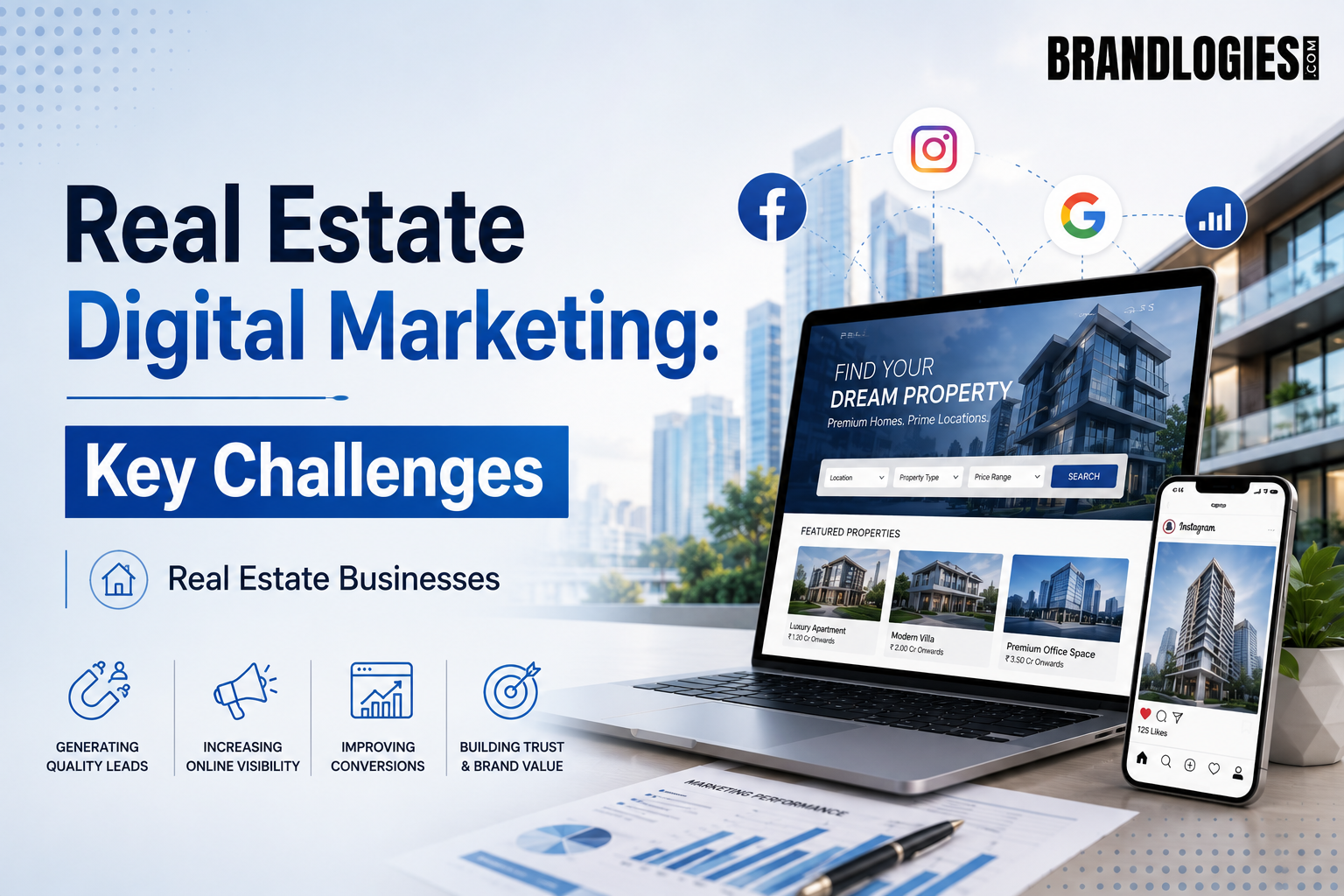
Here are some of the key real estate digital marketing challenges businesses are facing today.
1. Intense Competition for Online Visibility
Real estate is one of the most competitive industries in digital marketing. Developers, brokers, agents, channel partners, and property consultants are all competing for the same audiences and search terms.
Whether someone searches for a property in a particular location, a real estate developer, or a specific type of investment, they are likely to encounter numerous businesses offering similar options.
This makes it increasingly difficult for a real estate brand to stand out organically or through paid advertising. Businesses that do not maintain a strong and consistent digital presence can easily lose potential customers to competitors.
2. Generating High-Quality Real Estate Leads
Traffic and enquiries do not necessarily translate into business.
One of the biggest challenges faced by real estate companies is generating qualified leads rather than simply increasing the number of enquiries. Campaigns can attract people who are only browsing, comparing prices, looking for information, or are not financially ready to invest.
For a real estate business, this creates a difficult gap between marketing activity and actual sales opportunities.
The challenge becomes even greater when businesses operate in competitive markets where the cost of acquiring each potential customer continues to increase.
3. High Advertising Costs and Rising Competition
Paid advertising has become an important part of real estate marketing, particularly for businesses looking for immediate visibility.
However, competitive real estate keywords and audiences can make digital advertising expensive. Multiple developers and agencies may be targeting similar locations, property types, and buyer segments.
As competition increases, businesses need to be increasingly careful about where their advertising budget is being spent. Otherwise, high advertising expenditure can result in a large number of enquiries without a proportionate increase in qualified opportunities.
4. Difficulty in Building Trust Online
Buying property involves a significant financial commitment. As a result, customers rarely make decisions based on an advertisement alone.
Before contacting a real estate company, potential buyers may look at its website, online reviews, previous projects, social media presence, customer experiences, and overall brand reputation.
A weak or outdated digital presence can create doubts about the credibility of a business—even when the actual properties or services being offered are good.
For newer developers, real estate consultants, and smaller agencies, establishing this credibility online can be particularly challenging.
5. Hyperlocal Search Is Becoming More Competitive
Real estate marketing is closely connected to location.
A customer may search for properties in a specific neighbourhood, apartments near a particular landmark, commercial spaces in a business district, or investment opportunities in a particular city.
This makes local SEO for real estate highly important but also highly competitive. Businesses often need to establish visibility across multiple locations, neighbourhoods, and property categories.
Ranking for broad and high-intent searches can therefore become difficult when numerous local competitors are targeting the same audience.
6. Long and Complicated Buyer Journeys
Real estate purchases rarely happen immediately.
A prospective buyer may discover a property today but take weeks or months before making a final decision. During this period, they may visit multiple websites, compare projects, speak with different agents, check prices, explore financing options, and reconsider their requirements.
This long decision-making cycle creates a challenge for marketers.
A business may generate an enquiry but fail to remain relevant throughout the customer’s decision-making process. At the same time, prospects who are not ready to buy immediately may eventually become valuable customers.
7. Managing Multiple Digital Platforms
Real estate businesses are often present across several platforms, including websites, Google Business Profile, social media networks, property portals, paid advertising platforms, and lead management systems.
Keeping information consistent across these channels can become difficult.
Property availability, pricing, project information, contact details, offers, images, and other information may change regularly. If these updates are not reflected across platforms, businesses can create confusion for potential customers and sales teams.
8. Turning Website Traffic Into Actual Enquiries
Getting visitors to a real estate website is only one part of digital marketing.
The bigger challenge is what happens after users arrive.
Potential customers may leave a website because they cannot quickly find project details, location information, pricing information, contact options, or other information they are looking for.
A website may therefore receive considerable traffic without generating enough enquiries.
This creates a disconnect between visibility and business outcomes—something real estate companies need to pay close attention to.
9. Maintaining a Strong Real Estate Brand
Real estate businesses often focus heavily on individual projects and listings. While promoting properties is important, businesses also need to build recognition for the brand behind them.
A developer, consultant, broker, or real estate agency with a strong digital identity can create familiarity before a customer makes direct contact.
However, maintaining consistent branding across websites, social media, advertising, content, and other digital channels can be challenging, particularly when multiple projects are being promoted simultaneously.
10. Dependence on Third-Party Property Platforms
Property portals can provide valuable exposure and enquiries, but relying heavily on third-party platforms creates another challenge.
Real estate businesses have limited control over how their listings are displayed, how users interact with them, and how the platform’s algorithms or policies may change.
If a business depends primarily on external platforms for lead generation, changes in visibility, competition, pricing, or platform policies can directly affect its marketing performance.
11. Difficulty in Tracking Marketing and Sales Performance
Another major challenge is understanding which marketing activities are actually contributing to business growth.
Real estate companies may receive leads from Google, social media, property portals, organic search, referrals, and other sources. Without proper tracking, it can become difficult to determine:
- Which channels generate the best leads
- Which campaigns generate enquiries
- Which locations perform better
- Which properties receive the most interest
- How prospects move from enquiry to conversion
Without clear performance data, marketing decisions can become based on assumptions rather than actual customer behaviour.
12. Keeping Marketing and Sales Teams Aligned
Digital marketing generates attention and enquiries, but sales teams ultimately interact with prospects and move them toward a purchase.
When marketing and sales teams operate separately, important information can get lost.
For example, marketing may focus on generating a high number of leads while the sales team may be more concerned about lead quality. If both teams are not working toward the same objectives, businesses may experience missed follow-ups, poor lead handling, and lower conversion opportunities.
13. Changing Customer Expectations
Today’s property buyers expect more information before they engage with a business.
They may want project videos, high-quality images, location information, floor plans, virtual experiences, FAQs, reviews, market information, and quick responses to their enquiries.
This means real estate marketing is no longer limited to displaying property advertisements. Customers increasingly expect a complete digital experience before they decide whether a company is worth contacting.
14. Keeping Up With Changing Digital Marketing Trends
Search behaviour, advertising platforms, social media algorithms, and customer expectations continue to evolve.
The increasing role of AI-powered search, video content, automation, local search, and data-driven marketing is changing how businesses compete online.
For real estate companies focused primarily on property development or sales, keeping up with these changes while managing day-to-day operations can be difficult.
Why Real Estate Businesses Need a Stronger Digital Marketing Approach
The challenges facing the real estate industry are not limited to generating more traffic or posting regularly on social media. The bigger challenge is creating a digital presence that supports visibility, credibility, lead generation, customer engagement, and long-term business growth.
For real estate businesses, every digital touchpoint can influence a potential customer’s perception—from the first Google search to the website visit, social media interaction, advertisement, enquiry, and eventual sales conversation.
This is why digital marketing needs to be considered an important part of the overall real estate business strategy rather than simply another promotional activity.
Looking for Digital Marketing Support for Your Real Estate Business?
If your real estate business is struggling with low-quality leads, high advertising costs, poor online visibility, competitive local searches, weak brand presence, or difficulty converting digital enquiries, Brandlogies can help you build a stronger digital marketing presence for your real estate business.
As a digital marketing agency, Brandlogies works with businesses to strengthen their online visibility and connect their marketing efforts with their broader business goals. Consult Brandlogies to discuss your real estate digital marketing requirements and explore how the right digital marketing strategy can support your business growth.
Read Also – Ultimate 7-Step Digital Marketing Checklist for Small Businesses