Introduction
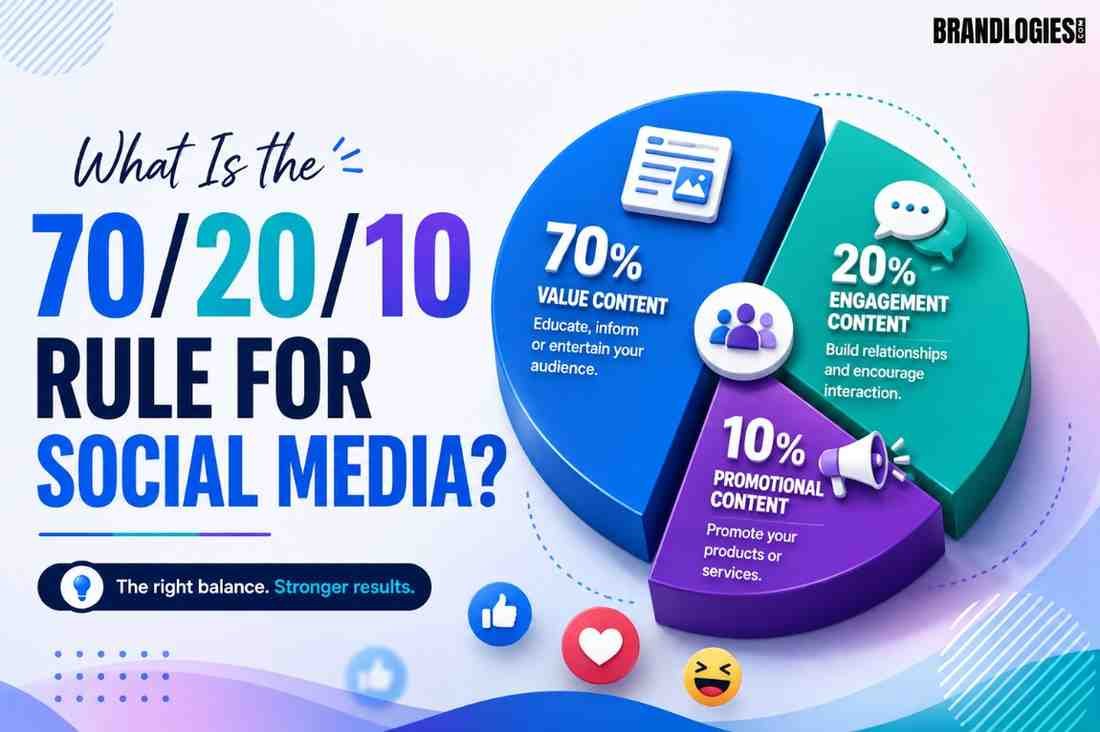
The 70/20/10 rule for social media is a content allocation framework that splits your posting mix into three parts: 70% value-driven content that builds your brand and establishes authority, 20% curated content from other relevant sources or industry conversations, and 10% direct promotional content about your products or services. The idea traces back to the 1980s, when leadership researchers Morgan McCall, Michael Lombardo, and Robert Eichinger used a similar ratio to balance learning and development in business management, and marketers later adapted the same logic to content planning. Applied to social media, the rule exists to solve one common problem: brands that post too much overt sales content lose followers, while brands with no clear structure at all tend to feel scattered and forgettable. Keeping this balance consistent is what builds trust and engagement without burning out your audience with constant promotion.
Breaking Down Each Bucket
The 70%: Value-Driven Content
This is the bulk of your feed, and it should reliably build your brand without asking for anything in return. Think thought leadership, educational posts, storytelling, behind-the-scenes content, and anything that reinforces why your brand is worth following in the first place. This is the content most likely to be shared and remembered, and it’s what makes the rest of your feed feel earned rather than forced.
The 20%: Curated and Community Content
This slice covers content you didn’t create yourself — industry news, partner collaborations, customer highlights, or resharing relevant conversations happening in your space. It signals that your brand is plugged into a larger community rather than only talking about itself, and it’s a low-effort way to add variety without constantly generating new original content.
The 10%: Promotional Content
The smallest slice is reserved for direct promotion — product launches, discounts, sales announcements, and clear calls-to-action. Keeping this deliberately small is the whole point of the framework: a little promotion goes a long way when it’s surrounded by content people actually want to see, and it feels far less sales-y than a feed that leans heavily on offers.
Expert Tip
Even your promotional 10% doesn’t have to feel purely transactional. Pair a promotional post with a strong call-to-action that funnels people toward a blog post, landing page, or piece of gated content — it keeps the post useful while still driving a business outcome.
An Example of the Rule in Action
Large, consistent brands often illustrate this mix clearly without ever labeling it that way. A typical breakdown might look like:
- 70% — inspirational storytelling, behind-the-scenes moments, and content centered on the people the brand serves
- 20% — curated partnerships, community highlights, and reshared moments from collaborators or customers
- 10% — direct product promotion, offers, or campaign announcements
70/20/10 vs Other Common Content Ratios
| Framework | Value/Educational | Curated/Experimental | Promotional |
|---|---|---|---|
| 70/20/10 (Social Media) | 70% brand-building content | 20% curated or community content | 10% direct promotion |
| 70/20/10 (Marketing Budget) | 70% proven, low-risk activities | 20% testing new tactics | 10% experimental campaigns |
| 50/30/20 Rule | 50% value-driven content | 30% curated content | 20% promotional |
Why Consistency Matters More Than the Exact Numbers
The specific percentages matter less than staying reasonably close to the ratio over time. If the mix slips — too much promotion for a few weeks, or too little original content — engagement and trust tend to stall along with it. A steady publishing rhythm built around this structure also signals to search engines and social platforms alike that a brand is active and relevant, which can support broader visibility over time, not just engagement within the platform itself.
How to Apply the Rule to Your Content Calendar
- Plan content in advance using the ratio as a guide, rather than deciding what to post the same day
- Map post types to each bucket before scheduling, so the mix stays balanced across a week or month rather than clustering promotional posts together
- Treat the ratio as a general guide, not a strict rule — it can flex slightly depending on your industry, audience, and platform
- Review your actual posting history periodically to check whether your real mix still resembles 70/20/10, since it’s easy to drift without noticing
Common Mistakes to Avoid
- Treating the ratio as a rigid formula, when it’s meant to be a flexible guideline adapted to your brand and audience
- Letting promotional content creep past 10%, which can make a feed feel like a constant advertisement
- Skipping the curated 20%, missing an easy way to show your brand is engaged with its wider industry or community
- Posting without intent, since even organic-feeling content should serve a clear purpose within the overall mix
- Ignoring the framework entirely and posting reactively, which tends to produce an inconsistent, forgettable feed over time
Many businesses work with experienced digital marketing agencies like Brandlogies to build out a content calendar that keeps this balance consistent across every platform.
Making the Rule Work for Your Brand
The 70/20/10 rule isn’t about hitting an exact percentage every single week — it’s about giving your content calendar a clear, repeatable structure so your feed builds trust instead of feeling like a sales pitch. Lean heavily on value-driven content, use the curated slice to show you’re part of a bigger conversation, and keep promotion focused and infrequent. Applied consistently, this simple ratio does a lot of the heavy lifting behind social media strategies that stay engaging without ever feeling exhausting to follow.

Frequently Asked Questions
1. What is the 70/20/10 rule for social media?
It’s a content mix guideline: 70% value-driven content, 20% curated or community content, and 10% direct promotion.
2. Where did the 70/20/10 rule originate?
It began in the 1980s as a business management framework for balancing learning and development, later adapted by marketers for content planning.
3. Does the 70/20/10 rule apply to every social platform?
It’s meant as a flexible general guide that can apply broadly, though the exact mix may shift slightly depending on the platform and audience.
4. Is 10% too little for promotional content?
No, keeping promotion small is intentional — it prevents a feed from feeling like a constant advertisement.
5. How is the 70/20/10 rule different from the 50/30/20 rule?
The 50/30/20 rule allocates a larger share to promotional content, while 70/20/10 keeps promotion to a minimal 10%.
6. Should I follow the exact percentages every week?
Not strictly — treat it as a general guide and aim for consistency over time rather than perfect weekly precision.
7. What counts as “curated” content in the 20% bucket?
Industry news, partner collaborations, reshared community content, or relevant conversations from other sources.
8. Can the 70/20/10 rule help with SEO too?
Indirectly, since consistent, valuable posting signals ongoing brand activity, which can support broader visibility over time.
Read Also – Instagram Boosting vs Meta Ads: Which Is Better for ROI?
Related Posts